
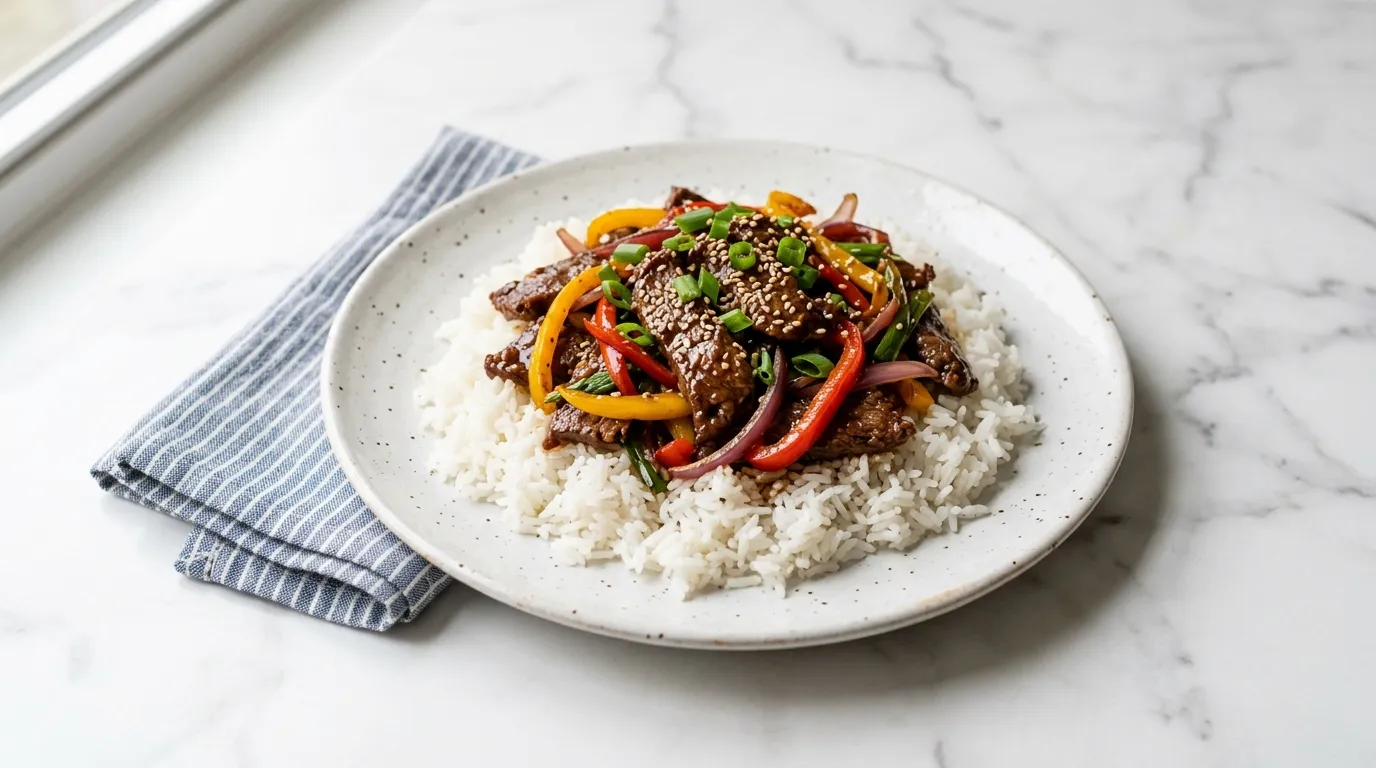
Sweet and Spicy Mongolian Beef Stir-Fry — Sweet and Spicy Mongolian Beef Stir-Fry features seven ingredients. I use flank steak to create a savory base. This recipe adds a sweet and spicy twist that sets it apart from traditional versions.
My Latest Video
A delicious blend of flavors.
- This version enhances the classic dish with a balance of sweetness from brown sugar and a hint of spice, creating a unique flavor profile.
- Using flank steak ensures tenderness, allowing it to absorb the sauce well while retaining its juices.
- The addition of bell pepper and onion gives the dish a fresh crunch, making each bite enjoyable.
Here's What You'll Need.
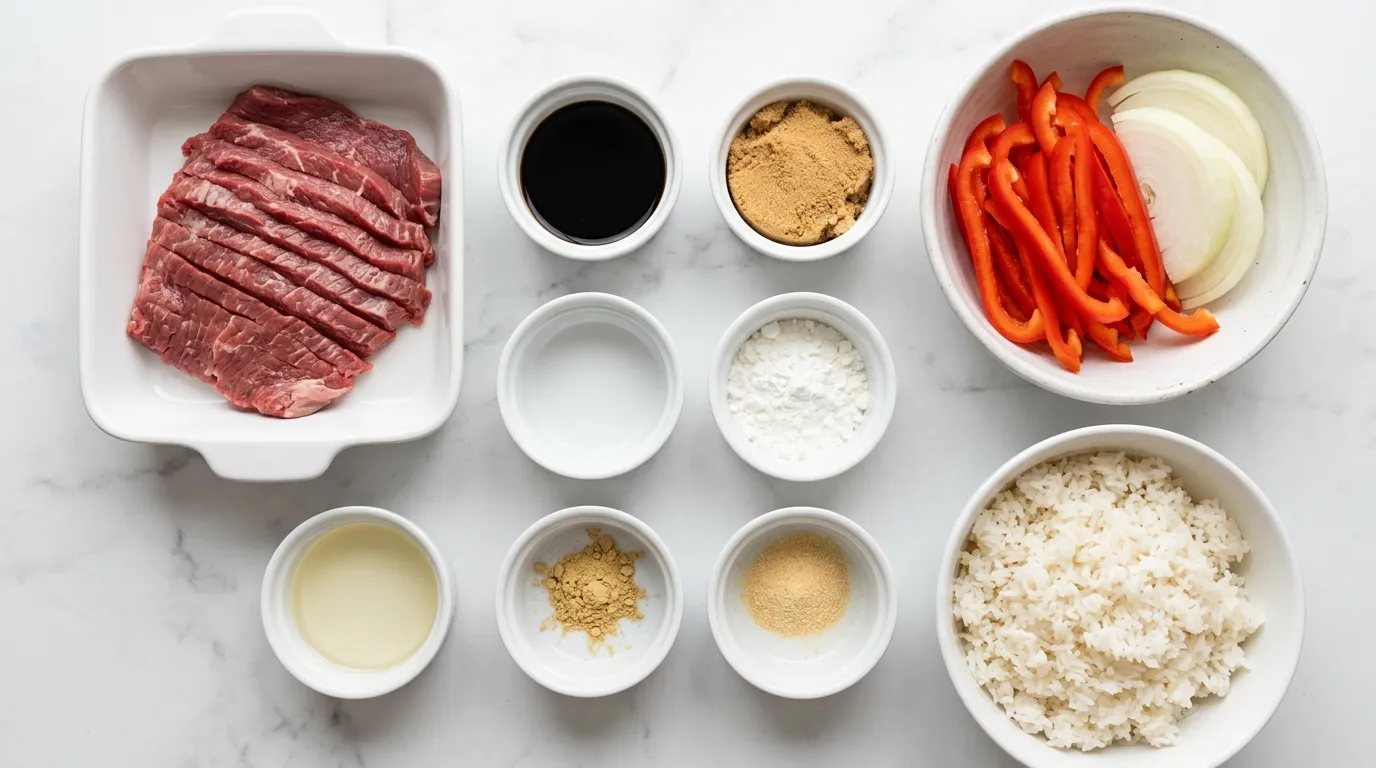
- 1 pound flank steak
- 1/4 cup soy sauce
- 2 tablespoons brown sugar
- 1 tablespoon cornstarch
- 1/2 teaspoon garlic powder
- 1/2 teaspoon ginger powder
- 2 tablespoons vegetable oil
- 1 bell pepper, sliced
- 1 onion, sliced
- 2 cups cooked rice
The Ones I'm Picky About.
- Flank steak Flank steak is lean and flavorful, perfect for stir-frying. It cooks quickly and becomes tender when sliced against the grain. If substituted with sirloin, it may be a bit fattier and take slightly longer to cook. Use the same amount, but adjust cooking time as needed.
- Soy sauce Soy sauce adds depth and saltiness. Using low-sodium soy sauce can reduce the salt content without sacrificing flavor. If you opt for tamari as a gluten-free substitute, use the same amount, but it may have a slightly different taste.
- Brown sugar Brown sugar provides sweetness and a hint of molasses flavor. Using white sugar instead will make the dish sweeter but lacks the depth brown sugar offers. If you substitute, use the same amount, but consider adding a touch of molasses for flavor.
- Cornstarch Cornstarch is crucial for thickening the sauce and giving the beef a glossy finish. If you use arrowroot powder as a substitute, it works similarly but might create a slightly different texture. Use the same amount for best results.
How It Goes from Bowl to Table.
PREPARE THE BEEF. First, I slice the flank steak against the grain into thin strips. This technique helps to break down the fibers, making it tender.
As I cut, I focus on achieving uniform pieces for even cooking. I know it's working when the strips are consistent in size, which will help them fry evenly.
If I cut with the grain, the meat may turn out tough and chewy. It's crucial to pay attention to how I position the steak before slicing.
MAKE THE SAUCE. Next, I mix the soy sauce, brown sugar, garlic powder, and ginger powder in a bowl. Stirring until the sugar dissolves creates a smooth mixture.
The sauce should have a glossy appearance. It tells me that the sugar is fully integrated.
If the sugar remains gritty, it can affect the sauce's consistency and flavor. I make sure to mix thoroughly to avoid any clumps, which would disrupt the balance of sweet and spicy.
HEAT THE OIL. Then, I heat vegetable oil in a large skillet over medium-high heat. I know the oil is ready when it shimmers and a drop of water sizzles upon contact.
This visual cue is important. If the oil isn't hot enough, the beef will steam instead of sear, and I won't get that nice browning.
I also let the oil coat the bottom of the skillet well. This ensures an even cooking surface for the beef.
STIR-FRY THE BEEF. Once the oil is hot, I add the beef in a single layer. I listen for the sizzling sound, which indicates that the beef is searing properly.
I let it sit for a few moments without stirring to develop a nice crust. If I stir too soon, the beef won't brown as well.
I keep an eye on the color, looking for a rich brown on the edges before flipping or stirring. This caramelization will enhance the flavor of the dish.
ADD THE VEGGIES. Now, I toss in the sliced bell pepper and onion. The vibrant colors brighten up the dish immediately.
I stir-fry the veggies for a few minutes until they soften slightly but still retain some crunch. I listen for the satisfying crunch as they hit the hot skillet.
If I overcook them, they might turn mushy and lose their fresh taste. It's essential to keep them moving in the pan to ensure even cooking while retaining their texture.
COAT WITH SAUCE. Next, I pour the sauce over the beef and veggies. The moment it hits the hot skillet, a delightful aroma fills the air.
I stir everything together, ensuring the beef and vegetables are well coated. The sauce should start to thicken and cling to the ingredients, creating a delicious glaze.
If it doesn't thicken, it may need a little longer on the heat. Watching for that change in consistency is key to achieving the right texture.
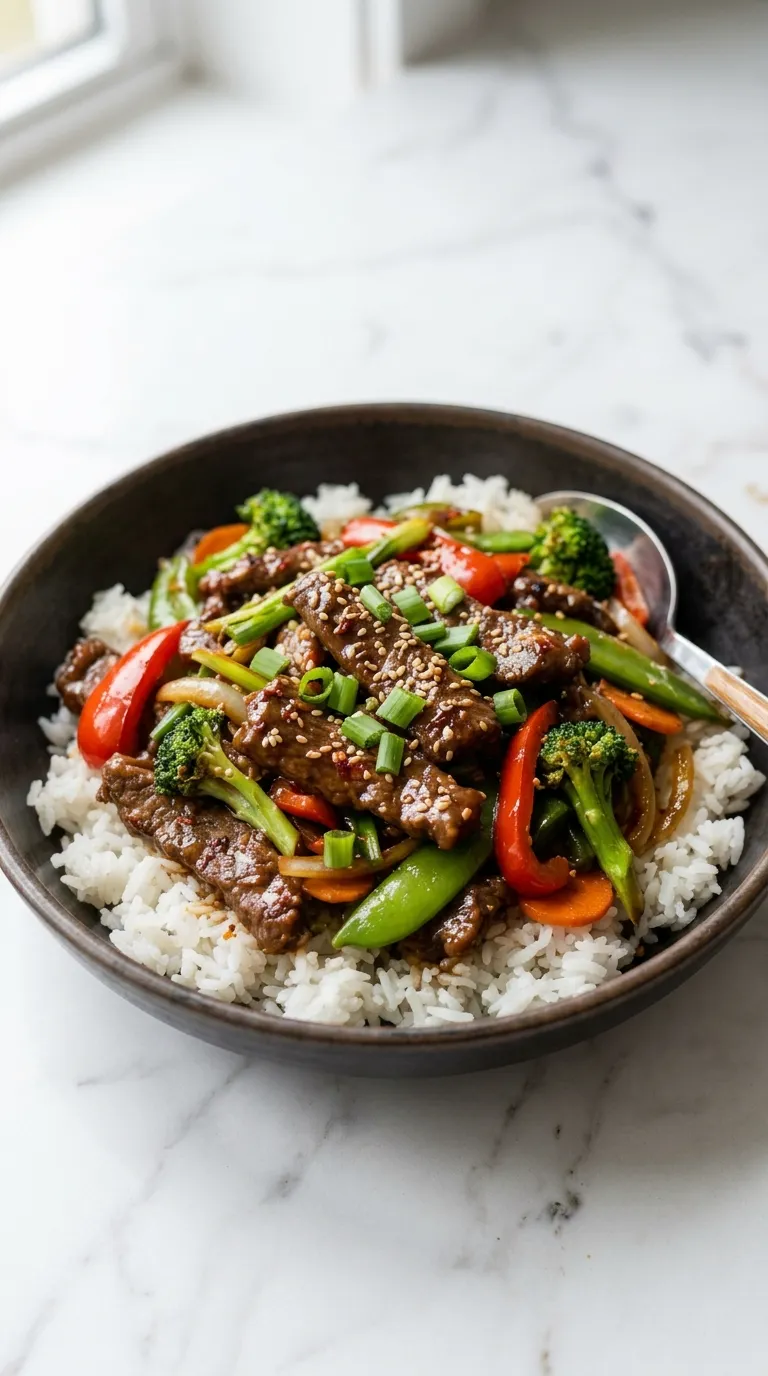
SERVE OVER RICE. After that, I serve the stir-fry over a bed of cooked rice. The rice acts as a perfect base, soaking up the flavorful sauce.
I make sure to plate the dish attractively, with a generous portion of beef and veggies on top. This presentation makes the meal inviting.
If I skimp on the rice, the dish might feel unbalanced. The rice should complement the stir-fry, enhancing the overall experience.

ENJOY THIS DELICIOUS MEAL. Finally, I sit down to enjoy this delicious meal. The flavors of sweet, spicy, and savory blend perfectly.
I take a moment to appreciate the balance of textures as I dig into the tender beef and crisp vegetables. Each bite should feel satisfying and fulfilling.
If I rush this step, I might miss the enjoyment that comes from savoring the meal. Taking my time allows me to fully appreciate the effort that went into making this dish.
Small Things That Made a Big Difference.
- Use fresh ingredients. Fresh vegetables and meat make a noticeable difference in flavor. Using older ingredients can lead to a less vibrant dish, making it taste dull and uninviting.
- Monitor cooking times. Each stove varies in heat intensity. Ignoring this means overcooked beef or mushy vegetables, ruining the texture and taste of your stir-fry.
- Prep all ingredients before cooking. Having everything ready speeds up the process. If you skip this, you risk burning the beef while chopping vegetables mid-cook, which affects the dish's quality.
- Adjust the sauce to taste. Every palate is different. Not tasting the sauce before adding it can lead to an overpowering sweetness or spice, throwing off the balance of flavors in the dish.
- Let the beef rest briefly. Resting after cooking helps redistribute juices. Skipping this step leads to dry meat, which detracts from the overall enjoyment of the meal.
What to Watch Out For.
- Not slicing against the grain Slicing with the grain makes the beef tough and chewy. This happens because the fibers remain long and intact. Always slice against the grain for tenderness.
- Overcooking the vegetables Overcooking can lead to mushy veggies that lose their texture. This occurs when they are left in the pan too long. Stir-fry just until they soften while keeping some crunch.
- Skipping the resting time for the beef Not letting the beef rest can result in loss of juices. This often leads to dry meat when cooked. Allow the beef to rest after cooking for a few minutes to retain moisture.
- Not ensuring the oil is hot enough Cooking in oil that isn't hot leads to steaming instead of searing. This prevents proper browning and affects flavor. Wait until the oil shimmers before adding the beef.
What Makes It a Whole Meal.
- Steamed broccoli Its bright green color and crunch complement the stir-fry. The mild flavor balances the sweet and spicy elements of the beef.
- Egg rolls These crispy treats add a delightful texture contrast. Their savory filling pairs well with the sweetness of the stir-fry.
- Sesame noodles These noodles provide a great base for the dish. Their nutty flavor and chewy texture enhance the overall meal experience.
- Miso soup A warm bowl of miso soup offers a comforting, umami-rich side. It pairs well with the flavors of Mongolian beef.
Just in Case You Have Leftovers.
- STORING Keep in an airtight container for 2 days. The sauce may thicken as it sits.
- FREEZING Do not freeze. The beef will become tough and the sauce will separate.
- REHEATING Reheat in a skillet over medium heat for 5-7 minutes. The beef may lose its tenderness.
Things People Wonder About.
Can I use a different cut of beef?
Yes, you can use cuts like sirloin or ribeye. Each has a different fat content, so adjust cooking time accordingly. For sirloin, cook slightly longer, while ribeye may require less time due to its fat.
How can I make it spicier?
Add crushed red pepper flakes or Sriracha to the sauce for extra heat. Start with a small amount and taste as you go, adjusting to your preferred spice level.
What if I don't have soy sauce?
You can substitute with coconut aminos for a soy-free option. It has a similar taste but is slightly sweeter. Use the same amount for best results.
Can I prepare this dish in advance?
Yes, you can marinate the beef and prepare the sauce ahead of time. Store them separately in the fridge for up to 24 hours. Stir-fry just before serving for the best texture and flavor.
- 1 pound flank steak
- 1/4 cup soy sauce
- 2 tablespoons brown sugar
- 1 tablespoon cornstarch
- 1/2 teaspoon garlic powder
- 1/2 teaspoon ginger powder
- 2 tablespoons vegetable oil
- 1 bell pepper, sliced
- 1 onion, sliced
- 2 cups cooked rice
- 1Slice the beef thinly. 1. Slice the one pound flank steak thinly against the grain.
- 2Mix soy sauce and spices. 2. In a bowl, mix together one quarter cup soy sauce, two tablespoons brown sugar, one tablespoon cornstarch, one half teaspoon garlic powder, and one half teaspoon ginger powder.
- 3Heat oil in a pan. 3. Heat two tablespoons vegetable oil in a 9x13 inch pan over medium-high heat.
- 4Cook beef until browned. 4. Add the sliced beef in a single layer and cook until browned, about three to four minutes per side.
- 5Stir in vegetables. 5. Stir in one sliced bell pepper and one sliced onion, cooking for an additional two to three minutes until vegetables are tender.
- 6Pour sauce over the stir-fry. 6. Pour the sauce mixture over the stir-fry, stirring to coat everything evenly, and cook for another minute until the sauce thickens.
- 7Serve it hot. 7. Serve the stir-fry hot over two cups of cooked rice.
- 8SHARE THE LOVE. 8. SHARE THE LOVE. Please leave a 5-star rating and review.
Reviews
Community Guidelines
We love hearing how this recipe turned out for you. Please keep reviews about the recipe itself, stay kind and helpful to other cooks, and leave out personal details or links. Every review is checked before it appears.