
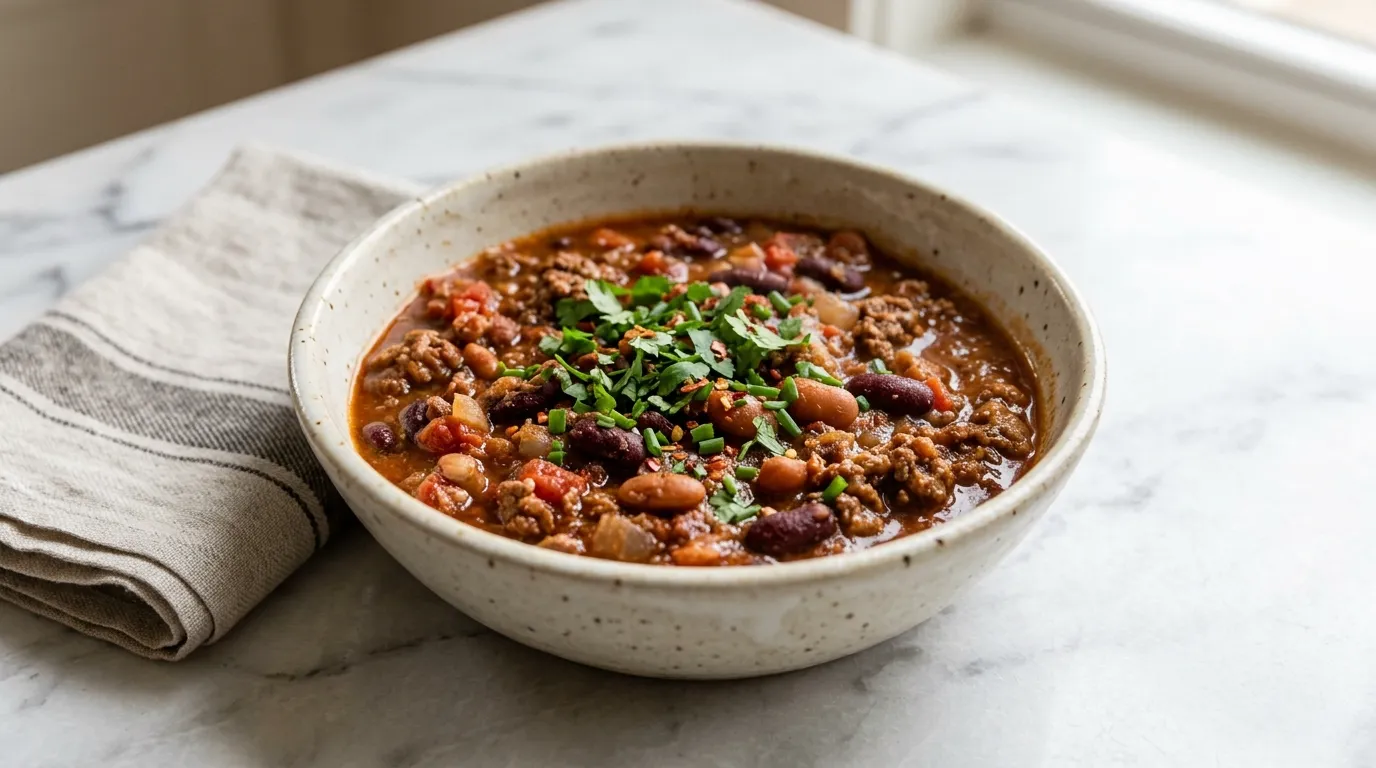
Hearty One Pot Chili for Winter Nights — This Hearty One Pot Chili features just 11 ingredients. It's a simple dish that warms you up on cold winter nights. The combination of beans and beef creates a rich, filling meal.
My Latest Video
A warm, filling dish for winter.
- This one pot chili combines beef and two types of beans, giving it a hearty texture and protein boost that sets it apart from simpler versions.
- Using canned tomatoes and broth makes the cooking process quick and efficient, perfect for small kitchens with limited time.
- The blend of spices adds depth without overwhelming, creating a balanced flavor profile that's comforting and satisfying.
The Short Shopping List.
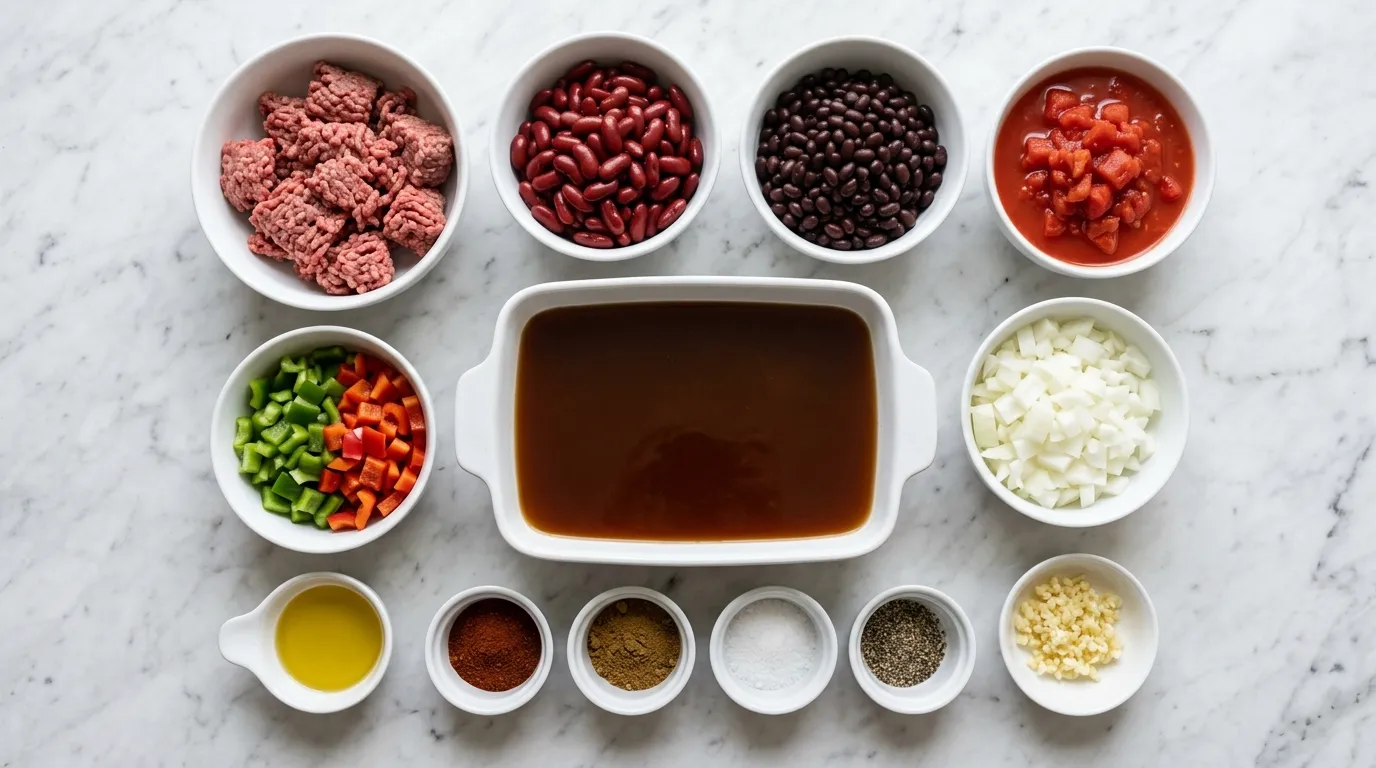
- 1 pound ground beef
- 1 can (15 oz) kidney beans, drained and rinsed
- 1 can (15 oz) black beans, drained and rinsed
- 1 can (28 oz) diced tomatoes
- 1 medium onion, chopped
- 1 bell pepper, chopped
- 2 cloves garlic, minced
- 2 tablespoons chili powder
- 1 teaspoon cumin
- 1 teaspoon salt
- 1/2 teaspoon black pepper
- 1 cup beef broth
- 1 tablespoon olive oil
What to Know Before You Shop.
- Ground beef This ingredient provides a rich flavor and hearty texture. Using lean ground beef (90% lean) reduces fat but may result in a drier chili. If substituting with turkey, use about 1 pound for similar texture, but it may need extra seasoning to enhance flavor.
- Kidney beans Kidney beans add creaminess and absorb the chili's flavors well. If you swap them for pinto beans, the texture will be softer and creamier, which may alter the overall mouthfeel. Use the same amount, about 15 oz, for consistency in the dish.
- Diced tomatoes Diced tomatoes bring acidity and balance to the chili. Using fresh tomatoes instead can lead to a chunkier texture. If you go fresh, use about 2 cups, but be aware of the need for additional seasoning due to less concentrated flavor.
- Chili powder Chili powder provides heat and depth. If you substitute with cayenne pepper, use about 1 teaspoon instead of 2 tablespoons, as cayenne is much spicier. This change will create a different flavor profile and heat level.
Here's How I Put It Together.
Gather Your Ingredients. First, I gather all the necessary ingredients. I lay out the ground beef, kidney beans, black beans, diced tomatoes, chopped onion, bell pepper, minced garlic, chili powder, cumin, salt, black pepper, beef broth, and olive oil.
This organization helps me stay efficient. I can see everything I need, making it easy to grab each item as I go.
If I forget something, it slows me down later. Having everything at hand means I won't have to pause and search for ingredients, which could disrupt my flow.
Cook the Meat. Next, I heat olive oil in a large pot over medium heat. I add the ground beef and break it apart with a spatula. The meat sizzles as it cooks, releasing a savory aroma.
I keep stirring until it browns evenly. The color shifts from pink to a rich brown, indicating it's ready. If I skip this step or rush it, the beef may remain undercooked, affecting the chili's flavor and texture.
I want a good sear, as it adds depth to the dish.
Add Vegetables and Spices. Now, I toss in the chopped onion, bell pepper, and minced garlic. The veggies soften and become fragrant, filling the kitchen with a warm scent.
I stir frequently, ensuring they cook evenly. The onions turn translucent, and the peppers soften, signaling that they are ready.
If I let them sit too long without stirring, they can burn, leaving an unpleasant taste in the chili. It's essential to keep moving them around for the best results.
Incorporate Beans and Tomatoes. I then incorporate the drained kidney beans, black beans, and diced tomatoes into the pot. I stir everything together, blending the flavors.
The mixture thickens as it heats, and I can see the vibrant colors of the beans and tomatoes mingling. This visual cue tells me the ingredients are combining well.
If I don't mix thoroughly, some flavors may remain isolated, leading to uneven taste. I want every bite to be rich and hearty.
Simmer the Chili. Next, I pour in the beef broth, letting it come to a simmer. The bubbling surface creates a comforting sound, indicating that the chili is cooking.
I adjust the heat to maintain a gentle simmer. Watching the bubbles rise and fall reassures me that everything is melding together.

If I allow it to boil too vigorously, it could scorch the bottom or make the chili too watery. A steady simmer ensures the flavors develop beautifully over time.
Adjust Seasoning to Taste. At this stage, I taste the chili and adjust the seasoning if necessary. I might add more chili powder, cumin, or salt to suit my preference.
The balance of flavors is crucial, and I want to achieve a well-rounded taste. If I skip this step, I risk serving a bland dish.
Each addition should enhance the flavor without overpowering it. A little bit of tasting goes a long way in perfecting the chili.
Serve Hot and Enjoy. Once the flavors meld, I ladle the chili into bowls. It looks thick and hearty, with a rich color that promises warmth.
I let it cool slightly before serving to avoid burning my mouth. The texture is satisfying, and the aroma continues to waft through the air.
If I serve it too hot, it can overwhelm the taste buds and mask the flavors. Patience is key here for the best experience.

Top with Garnishes. Finally, I top each bowl with garnishes like shredded cheese, sour cream, or fresh herbs. These additions add a pop of color and enhance the overall presentation.
The melted cheese creates a delightful contrast with the chili. I can see the vibrant toppings against the rich chili, making it even more inviting.
If I skip this step, the dish might lack visual appeal. A well-garnished chili looks as good as it tastes, making the meal feel complete.
The Details That Changed the Result.
- Be mindful of cooking time. If you rush the simmering process, the flavors won't have time to develop. This can lead to a bland chili that lacks depth and richness. Allowing it to simmer longer enhances the overall taste and brings everything together beautifully.
- Use a large pot. A cramped pot can cause the ingredients to steam instead of brown. This may affect the texture and flavor of the chili. Adequate space allows for proper cooking, ensuring that each ingredient contributes to the dish's overall richness.
- Stir occasionally. If you forget to stir, ingredients may stick to the bottom and scorch. This can create an unpleasant burnt taste that affects the entire pot of chili. Regular stirring helps maintain an even cook and prevents any unwanted flavors from developing.
- Consider resting the chili. If served immediately after cooking, flavors may not be fully integrated. Letting it sit for a short time allows the ingredients to meld, resulting in a more cohesive and flavorful dish. Serving too soon can leave you with an uneven taste profile.
- Adjust the seasoning gradually. If you add too much spice at once, it can overpower the dish. Incremental adjustments allow for better control over flavor balance. Over-seasoning can ruin the chili, making it too strong or unpalatable. A careful approach leads to a more enjoyable outcome.
Where It's Easy to Slip.
- Not browning the meat properly Failing to brown the meat can lead to a bland flavor. The Maillard reaction adds depth to the dish. Instead, take your time to achieve a good sear for the best results.
- Overcooking the vegetables If you let the vegetables cook too long, they can become mushy and lose their flavor. Stir them frequently and keep an eye on their texture. Aim for a tender yet firm consistency.
- Skipping the tasting step Not tasting the chili before serving may lead to a bland dish. Seasoning can vary based on ingredient freshness. Always taste and adjust the flavors to ensure a well-balanced chili.
- Boiling instead of simmering Allowing the chili to boil can scorch the bottom and affect texture. Instead, maintain a gentle simmer to meld the flavors beautifully. This slow cooking is key for perfect chili.
How I Round Out the Plate.
- Cornbread Its slightly sweet flavor complements the chili's heat. The texture contrast adds a delightful element to the meal.
- Guacamole The creamy texture and fresh taste balance the rich chili. It also adds a pop of color and nutrition to the plate.
- Tortilla chips They provide a satisfying crunch and are perfect for dipping. The salty flavor enhances the chili's richness.
- Rice Serving chili over rice creates a hearty and filling meal. The rice absorbs the flavors, making each bite delicious.

What to Do with What's Left.
- STORING Keep in an airtight container in the fridge for up to 4 days. The flavors meld and deepen over time.
- FREEZING Freeze in a freezer-safe container for up to 2 months. Thaw in the fridge overnight. The texture may become slightly grainy.
- REHEATING Reheat in a saucepan over medium heat until it reaches 165°F. Stir well to restore consistency.
A Few Things Worth Answering.
Can I use canned tomatoes instead of fresh?
Yes, canned tomatoes are convenient and often more flavorful. One 28 oz can is perfect for this recipe, saving you prep time.
How long will leftovers last in the fridge?
Leftovers can last up to 4 days when stored in an airtight container. Reheat thoroughly before serving to enjoy the flavors again.
Can I make this chili vegetarian?
Absolutely! Use lentils or additional beans in place of ground beef. Adjust the broth to vegetable broth and keep the rest of the recipe the same.
What can I do if my chili is too spicy?
If your chili is too spicy, add a little sugar or honey to balance the heat. You can also stir in extra beans or tomatoes to dilute the spice.
- 1 pound ground beef
- 1 can (15 oz) kidney beans, drained and rinsed
- 1 can (15 oz) black beans, drained and rinsed
- 1 can (28 oz) diced tomatoes
- 1 medium onion, chopped
- 1 bell pepper, chopped
- 2 cloves garlic, minced
- 2 tablespoons chili powder
- 1 teaspoon cumin
- 1 teaspoon salt
- 1/2 teaspoon black pepper
- 1 cup beef broth
- 1 tablespoon olive oil
- 1Prepare the Pan. Prepare a 9x13 inch baking dish by lightly greasing it with olive oil.
- 2Cook the Ground Beef. In a large saucepan over medium heat, add one pound of ground beef. Cook until browned, breaking it apart with a spatula, about five to seven minutes.
- 3Add Onions and Peppers. Add one medium onion, chopped, and one bell pepper, chopped, to the beef. Cook for an additional five minutes until the vegetables are soft.
- 4Mix in Beans and Sauce. Stir in one can (15 oz) kidney beans, drained and rinsed, one can (15 oz) black beans, drained and rinsed, and one can (28 oz) diced tomatoes. Also, add two tablespoons of chili powder, one teaspoon of cumin, one teaspoon of salt, and one half teaspoon of black pepper. Pour in one cup of beef broth and mix well.
- 5Simmer for Flavor. Reduce heat to low and let the chili simmer for twenty minutes, stirring occasionally.
- 6SHARE THE LOVE. If you enjoyed this recipe, please take a moment to rate it five stars and leave a review. Share the love!
Reviews
Community Guidelines
We love hearing how this recipe turned out for you. Please keep reviews about the recipe itself, stay kind and helpful to other cooks, and leave out personal details or links. Every review is checked before it appears.