
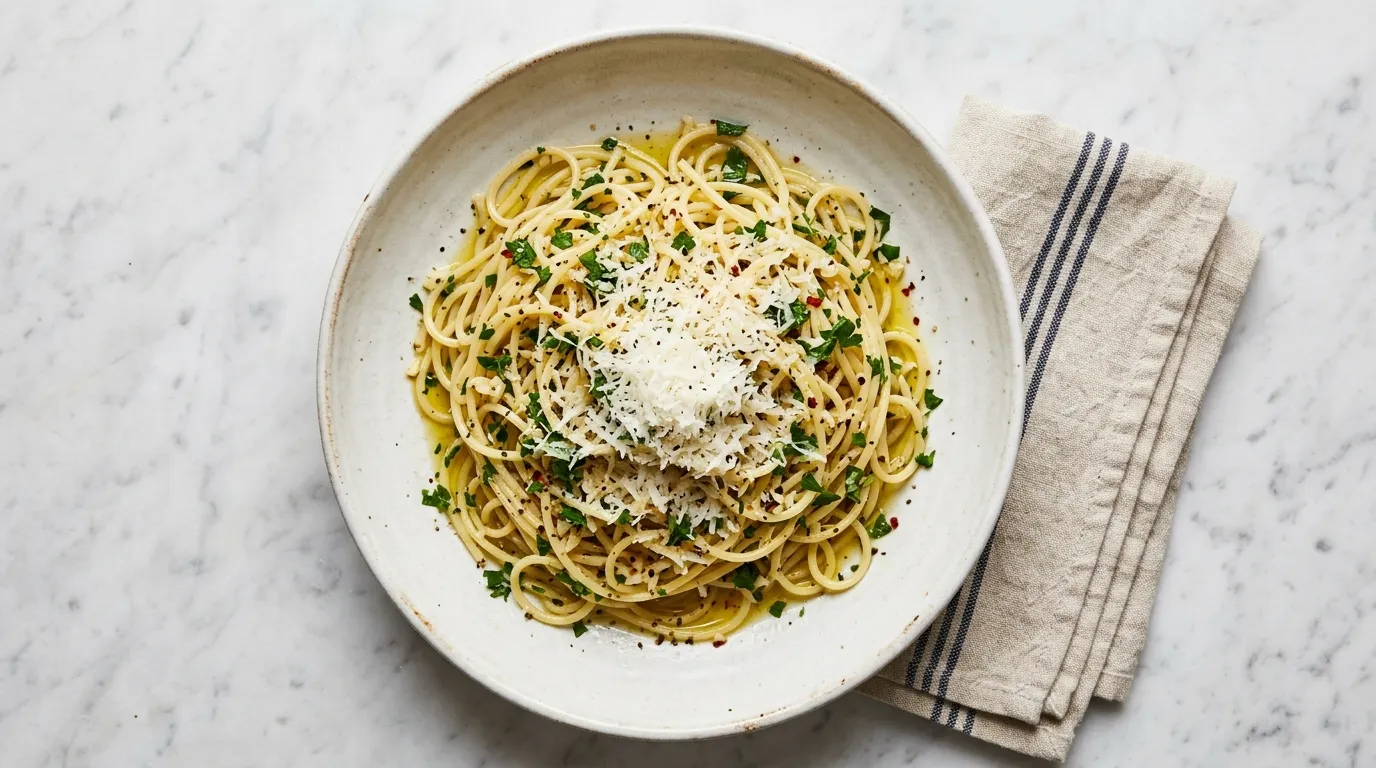
One Pot Spaghetti with Garlic and Olive Oil — One Pot Spaghetti with Garlic and Olive Oil uses just eight ingredients to create a simple meal. In about 20 minutes, I cook it all in one pan. This recipe focuses on garlic and olive oil for a rich taste.
My Latest Video
A simple, flavorful pasta dish.
- This one pot version combines spaghetti, garlic, and olive oil, cooking everything together for a rich flavor without needing multiple pots.
- Using minimal ingredients keeps the recipe straightforward and accessible, perfect for small kitchens with limited space and time.
- The technique allows the spaghetti to absorb the flavors of garlic and oil, creating a satisfying dish that feels indulgent.
Here's What You'll Need.
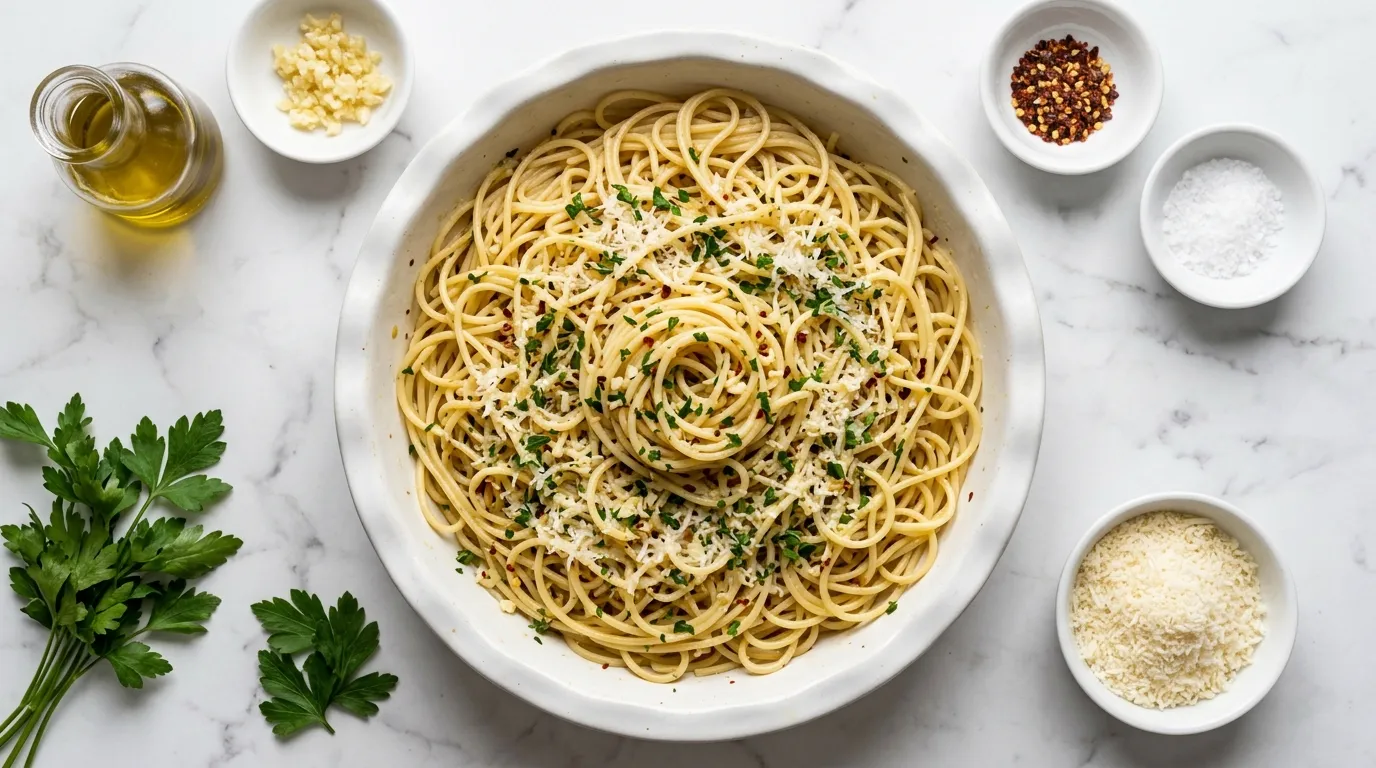
- 8 ounces spaghetti
- 4 tablespoons olive oil
- 4 cloves garlic, minced
- 4 cups water
- 1 teaspoon salt
- 1/4 teaspoon red pepper flakes
- 1/4 cup fresh parsley, chopped
- 1/2 cup grated Parmesan cheese
A Word on What You're Buying.
- Spaghetti Spaghetti is ideal for this dish due to its long, thin shape, which allows it to absorb flavors from the garlic and oil. Substituting with fettuccine may alter the texture and cooking time. If using fettuccine, expect a slightly longer cooking time of about 11-12 minutes.
- Olive Oil Extra virgin olive oil enhances the flavor, giving it a rich, fruity taste. If you use regular olive oil, the dish may lack depth. For a lighter option, you can substitute with avocado oil in the same amount, but it will change the flavor profile.
- Garlic Fresh garlic adds a strong, aromatic flavor that dried garlic cannot replicate. If you use garlic powder instead, use about 1 teaspoon, but the freshness will be missing. Fresh garlic also provides a more vibrant taste that enhances the overall dish.
- Parmesan Cheese Grated Parmesan adds creaminess and a salty depth that ties the dish together. If you substitute with Pecorino Romano, expect a sharper flavor. Use the same amount, but be mindful that Pecorino is saltier, so adjust the added salt accordingly.
Start to Finish.
Sauté Garlic in Olive Oil. I heat the olive oil in a pan over medium heat. Once the oil is shimmering, I add the minced garlic. The garlic sizzles and releases a fragrant aroma. I stir it gently, ensuring it does not brown too much.
If it burns, it will taste bitter, ruining the dish. The garlic should turn golden and soften, which takes a few minutes. I keep a close eye on it, stirring often. This step is crucial as it builds the base flavor.
The sound of the garlic sizzling is a good sign. I can smell the rich, savory scent filling the kitchen, indicating that it's ready for the next step.
Add Spaghetti to Pan. Next, I add the spaghetti directly into the pan. I carefully separate the strands as I push them into the oil and garlic mixture. It feels satisfying to see the spaghetti mingle with the fragrant oil.
I want to ensure each piece gets coated, which means moving it around a bit. If I don't separate the strands, they may stick together while cooking. Keeping them loose at this stage makes a big difference in texture later.
I hear a soft clinking sound as the pasta hits the pan, a reassuring sign that I'm on track.
Pour in Water and Season. Water goes into the pan next. I pour it over the spaghetti, covering it completely. As the water hits the hot oil and garlic, a gentle bubbling sound emerges.
This is what I want to hear. It indicates that the mixture is about to come to a boil. I sprinkle in the salt and red pepper flakes for flavor.
The water should look slightly cloudy from the salt dissolving. If the water isn't seasoned properly now, the spaghetti may taste bland. Stirring helps distribute the seasoning evenly, ensuring every bite is packed with flavor.
Bring to Boil, Stir Often. The mixture needs to reach a boil now. I turn up the heat slightly and watch closely. It doesn't take long for the water to begin bubbling vigorously.
I stir often to keep the spaghetti submerged. This prevents any pieces from sticking to the bottom of the pan. If I neglect to stir, the pasta could clump together or, worse, burn at the bottom.
I listen for that consistent bubbling sound, which tells me it's boiling well. This foamy surface is what I want to see before moving on.
Cook Until Al Dente. Cooking time is important. I check the spaghetti regularly as it cooks. I'm looking for that al dente texture, where the pasta is firm yet tender.
When I bite into a strand, it should have a slight resistance. If I overcook it, it will become mushy and lose its appeal. This step usually takes around ten minutes, but I trust my taste buds more than the clock.
I keep stirring to ensure even cooking. The pasta will absorb the flavors from the garlic and olive oil, which adds to the overall taste.
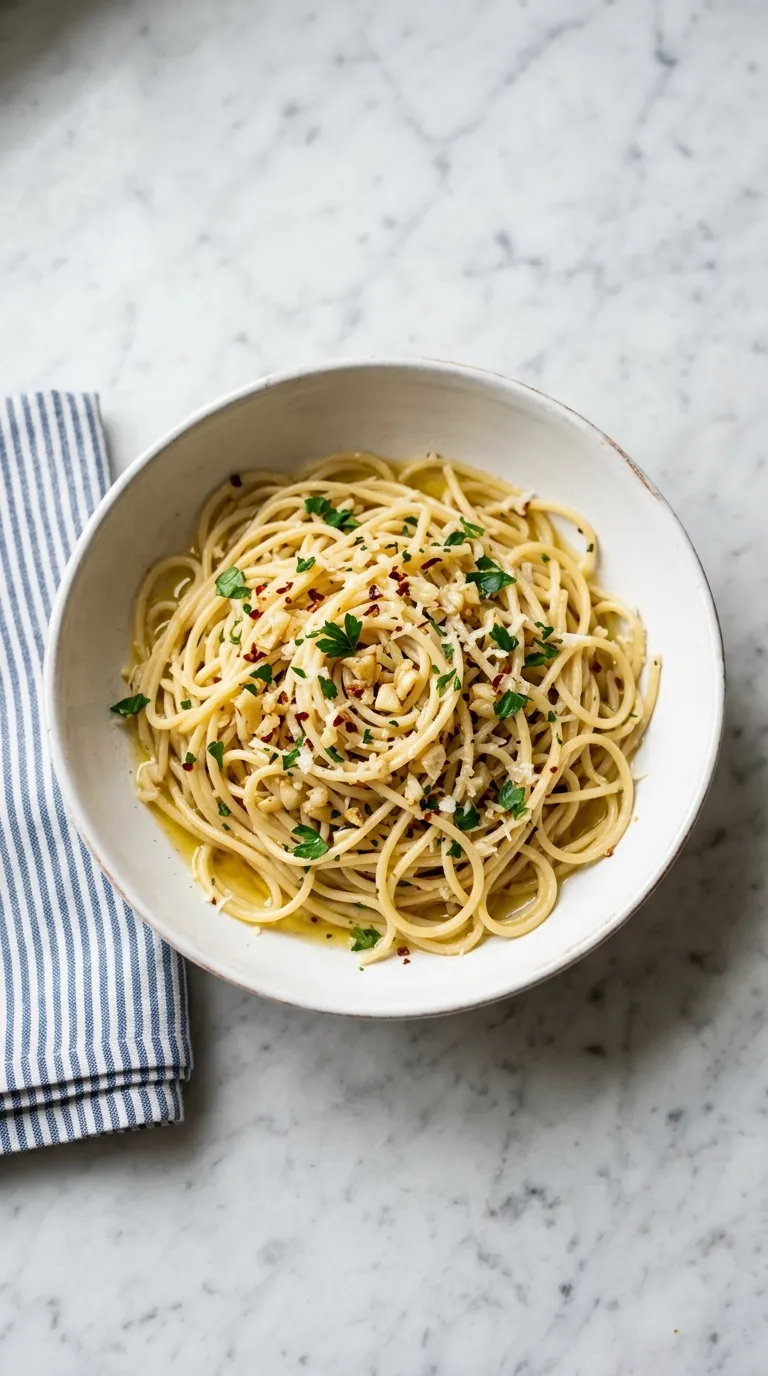
Toss with Parsley and Cheese. Once the spaghetti is cooked, I turn off the heat. I grab the chopped parsley and grated cheese next. I add both directly to the pan, tossing them with the spaghetti.
The vibrant green parsley contrasts beautifully with the pale pasta. It smells fresh and inviting. The cheese melts slightly and adds creaminess to the dish.
If I don't toss well, some bites might miss out on those flavors. I use tongs to mix everything thoroughly, ensuring every strand is coated. The texture should be creamy and flavorful.
Plate the Spaghetti. Plating the spaghetti is the next step. I use tongs to twist a generous portion onto a plate. The strands should elegantly fall onto the dish, creating a nice mound.
I take care to arrange it attractively, allowing the colors to show. A sprinkle of extra parsley on top adds a pop of color. If I don't plate it well, it might not look appetizing, even if it tastes good.
This step is about presentation. I want it to look as good as it tastes, inviting me to dig in.
Enjoy Your Meal! Finally, I sit down to enjoy my meal. The aroma of garlic and parsley fills the air around me. As I take the first bite, I savor the flavors.
The spaghetti is perfectly cooked, and the cheese adds richness. I appreciate the balance of heat from the red pepper flakes. Each forkful delivers a delightful combination of textures and tastes.
If I rushed this process, I wouldn't enjoy it as much. Eating is not just about nourishment; it's about taking time to appreciate the meal.
What I'd Tell a Friend Making This.
- Use fresh garlic for better flavor. Dried garlic lacks the depth and aroma of fresh. Skipping this tip results in a dish that tastes flat and uninviting, missing that essential garlicky punch that makes this recipe shine.
- Adjust salt based on the water's taste. Not all water is created equal. If I skip tasting the water after adding salt, the pasta may end up bland. Proper seasoning at this stage is crucial for flavor absorption during cooking.
- Monitor the heat carefully. Cooking at too high a temperature can lead to uneven cooking. Ignoring this can result in mushy pasta or burnt garlic, which ruins the dish's overall taste and texture.
- Don't skip the stirring. If I forget to stir while boiling, the spaghetti can clump together or stick to the pan. This mistake leads to unevenly cooked pasta and a frustrating eating experience.
- Let the pasta rest after cooking. Serving immediately might seem logical, but letting it sit for a minute allows the flavors to meld. Skipping this step can lead to a less cohesive taste and texture.
- Use a large enough pan. A cramped pan can lead to uneven cooking and sticking. If I don't give the spaghetti enough room, it may clump together, affecting the final texture of the dish.
- Save some pasta water. Before draining, reserve a small amount of pasta water. If I forget this step, I lose the chance to adjust the sauce consistency later, potentially ending up with a dry dish.
Where This Usually Goes Wrong.
- Overcooking the Spaghetti If the spaghetti cooks too long, it becomes mushy and loses its desirable texture. This happens when you don't check for doneness frequently. To avoid this, taste the spaghetti a minute or two before the suggested cooking time.
- Not Separating Spaghetti Strands If you don't separate the spaghetti while adding it to the pan, the strands can stick together and clump. This leads to uneven cooking and a less pleasant texture. Make sure to gently push the spaghetti into the oil and garlic mixture to keep it loose.
- Skipping the Salt If you forget to add salt to the water, the spaghetti may taste bland. Salt enhances the natural flavor of the pasta. Always add it to the water before it comes to a boil to ensure even seasoning.
- Not Tossing Ingredients Well Failing to mix the parsley and cheese thoroughly can result in uneven flavor distribution. Some bites may lack the freshness of parsley or creaminess of cheese. Use tongs to ensure every strand is coated and well mixed.
How I Round Out the Plate.
- Garlic Bread Garlic bread complements the flavors of the spaghetti while providing a crunchy texture. It's perfect for soaking up any leftover oil and garlic on the plate.
- Caesar Salad The crisp romaine and tangy dressing in a Caesar salad balance the richness of the spaghetti. This fresh side adds a nice contrast in textures and flavors.
- Roasted Vegetables Roasted seasonal vegetables add a healthy, colorful side that pairs beautifully with the pasta. Their caramelized sweetness enhances the overall meal experience.
- Bruschetta Fresh bruschetta, with tomatoes and basil, offers a refreshing bite that complements the richness of the spaghetti. The acidity of the tomatoes cuts through the oiliness nicely.
Leftovers, Handled.
- STORING Keep in an airtight container for 2 days. The pasta may become mushy.
- FREEZING Do not freeze. The texture will become grainy when thawed.
- REHEATING Reheat in a skillet over medium heat for 5 minutes. The pasta will dry out if overheated.
Answering the Usual Ones.
Can I use whole wheat spaghetti?
Yes, whole wheat spaghetti is a great alternative. It will have a nuttier flavor and a slightly different texture. Cooking time may increase by 1-2 minutes, so taste it for doneness.
How can I make this dish vegetarian?
This recipe is already vegetarian since it primarily consists of pasta, garlic, and olive oil. Ensure the cheese you use is vegetarian-friendly, as some cheeses may contain animal rennet.
Can I make this ahead of time?
Yes, you can prepare the spaghetti ahead of time. Store it in an airtight container in the fridge for up to 3 days. Reheat gently on the stove with a splash of water to prevent sticking.
What can I add for extra protein?
For added protein, consider mixing in grilled chicken, shrimp, or chickpeas. Add cooked protein towards the end of cooking to heat through without overcooking.
- 8 ounces spaghetti
- 4 tablespoons olive oil
- 4 cloves garlic, minced
- 4 cups water
- 1 teaspoon salt
- 1/4 teaspoon red pepper flakes
- 1/4 cup fresh parsley, chopped
- 1/2 cup grated Parmesan cheese
- 1Gather Ingredients and Equipment. Gather 8 ounces spaghetti, 4 tablespoons olive oil, 4 cloves garlic (minced), 4 cups water, 1 teaspoon salt, 1/4 teaspoon red pepper flakes, 1/4 cup fresh parsley (chopped), and 1/2 cup grated Parmesan cheese. Also, have a saucepan and a bowl ready.
- 2Sauté Garlic in Olive Oil. In a saucepan, heat 4 tablespoons olive oil over medium heat. Add 4 cloves minced garlic and sauté for 1 to 2 minutes until fragrant, stirring frequently.
- 3Add Spaghetti and Water. Add 8 ounces spaghetti and 4 cups water to the saucepan. Stir to combine.
- 4Season and Bring to Boil. Season with 1 teaspoon salt and 1/4 teaspoon red pepper flakes. Increase heat to high and bring the mixture to a boil.
- 5Cook Until Al Dente. Once boiling, reduce heat to medium-low and cook for about 10 to 12 minutes, stirring occasionally, until the spaghetti is al dente.
- 6Toss with Parsley and Cheese. Remove the saucepan from heat. Toss the spaghetti with 1/4 cup chopped fresh parsley and 1/2 cup grated Parmesan cheese until well combined.
- 7Plate and Serve. Plate the spaghetti and serve it immediately in bowls or on plates.
- 8SHARE THE LOVE. If you enjoyed this recipe, please leave a 5-star rating and a review to share the love.
Reviews
Community Guidelines
We love hearing how this recipe turned out for you. Please keep reviews about the recipe itself, stay kind and helpful to other cooks, and leave out personal details or links. Every review is checked before it appears.