
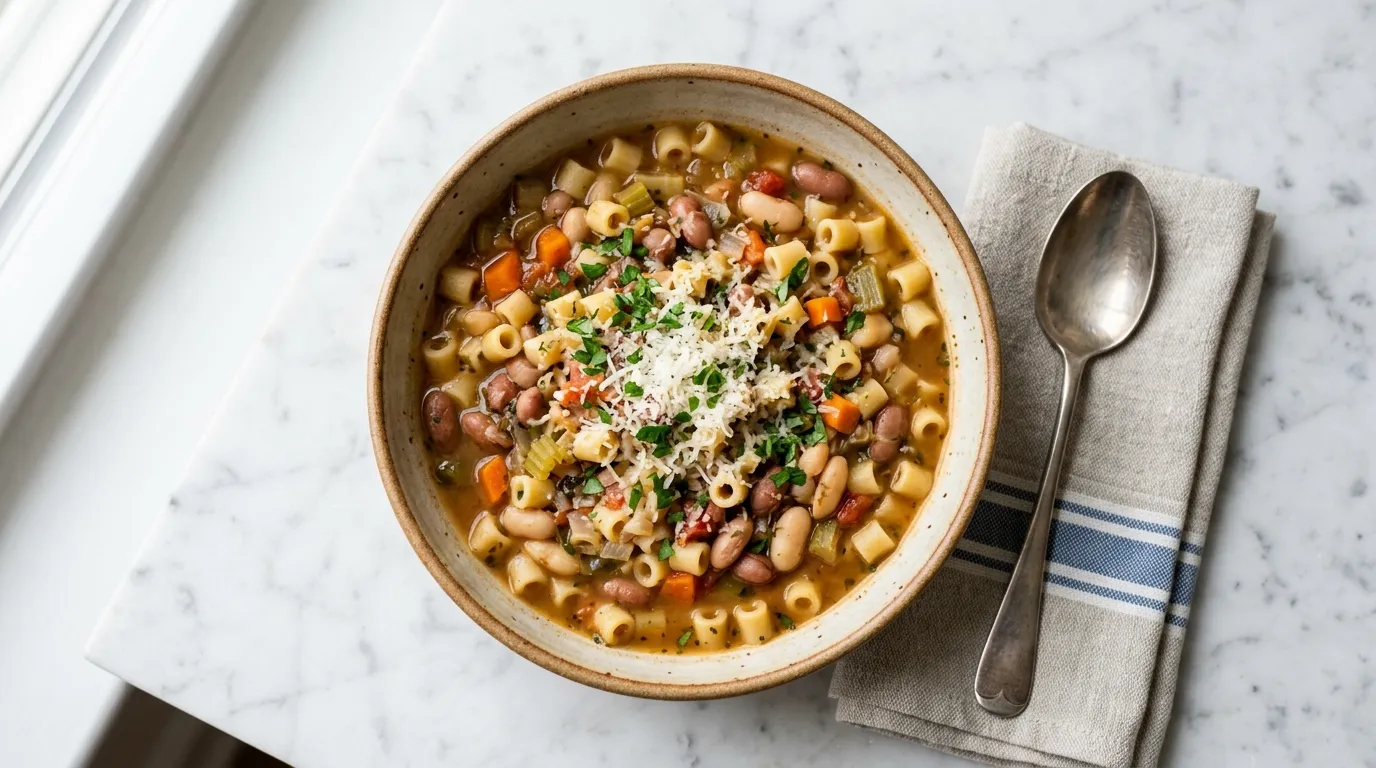
Hearty Pasta Fagioli with Beans and Vegetables — Hearty Pasta Fagioli features 11 ingredients. This dish blends pasta, beans, and vegetables in a warm broth. It's a comforting meal that's packed with flavor and nutrition.
My Latest Video
A comforting bowl for every season.
- This version of Pasta Fagioli incorporates a variety of vegetables, creating a heartier and more nutritious meal than the traditional recipe.
- Using canned beans and tomatoes makes the preparation quick and convenient, ideal for a busy weeknight.
- The combination of ditalini pasta and vegetable broth adds a satisfying texture and depth to each spoonful.
What Goes in the Bowl.
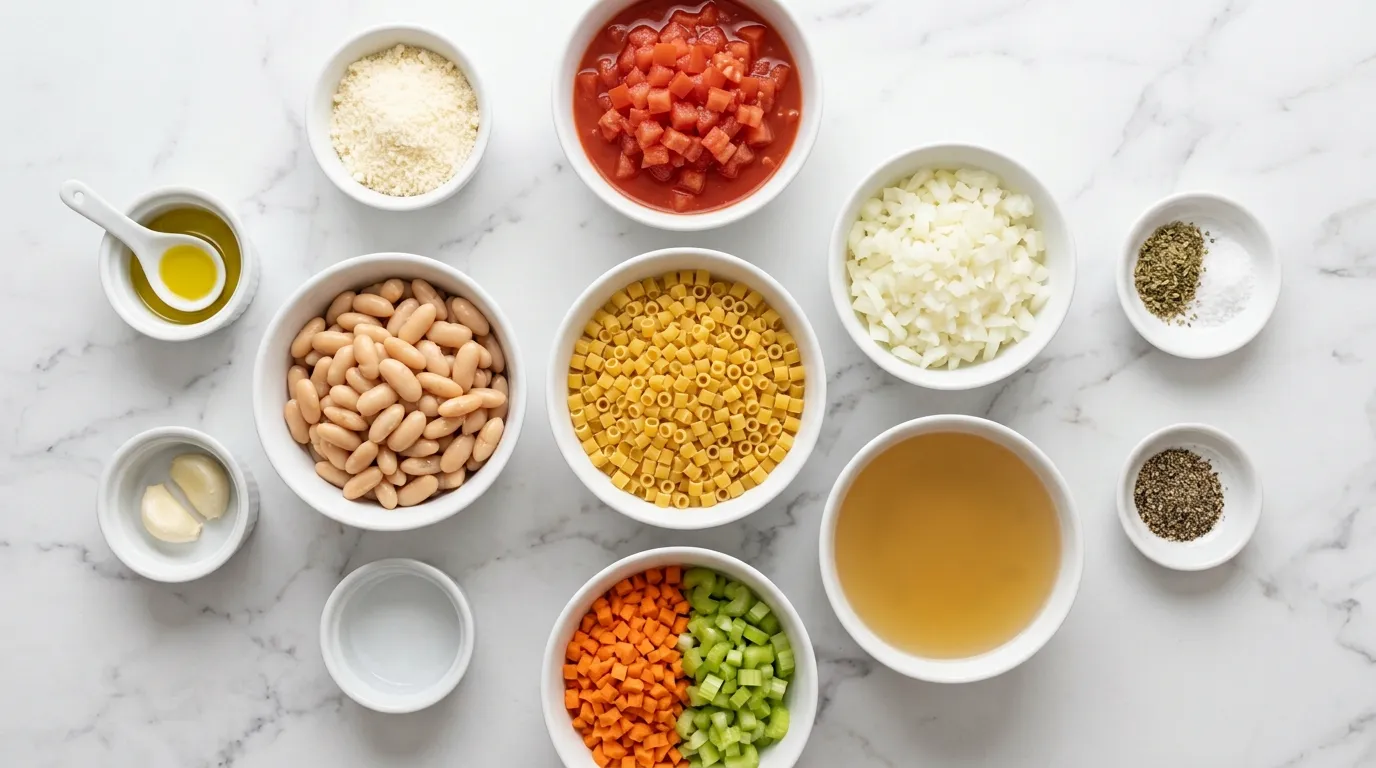
- 1 cup ditalini pasta
- 1 can (15 oz) cannellini beans, drained and rinsed
- 1 can (15 oz) diced tomatoes
- 1 medium onion, chopped
- 2 cloves garlic, minced
- 1 carrot, diced
- 1 celery stalk, diced
- 4 cups vegetable broth
- 1 tablespoon olive oil
- 1 teaspoon dried oregano
- 1 teaspoon salt
- 1/2 teaspoon black pepper
- Grated Parmesan cheese for serving
Worth Knowing About a Few of These.
- Ditalini pasta This pasta shape holds sauce well and adds a nice texture. Substitute with elbow macaroni if needed, but it may not soak up broth as effectively. Use the same amount, one cup, but check cooking time since different shapes can vary.
- Cannellini beans These beans add creaminess and a mild flavor. If you use kidney beans, they will provide a firmer texture and a slightly different taste. Use the same amount, one can, but kidney beans may require more cooking time to soften.
- Vegetable broth This broth creates a flavorful base for the dish. Using water instead will result in a bland outcome. If substituting with chicken broth, it will enhance flavor but change the dish's vegetarian profile. Use the same amount, four cups.
- Grated Parmesan cheese Parmesan adds a salty, rich finish. If omitted, the dish may taste flat. Nutritional yeast can be a dairy-free substitute, but it lacks the same depth. Use about a quarter cup of nutritional yeast for a similar flavor boost.
Here's How I Put It Together.
CHOP VEGETABLES. I start by chopping the vegetables. I take the onion and peel it, then slice it into small pieces. The carrot gets diced into tiny cubes, allowing it to cook evenly. I also chop the celery into similar-sized pieces. Each cut should be uniform.
This ensures everything cooks at the same rate. I can tell I've done this right when the vegetables have a clean, fresh look. They should be vibrant and colorful, not bruised or mushy. Uniformity is key here. If the pieces are too large, some will be overcooked while others remain crunchy.
So, I focus on getting them all about the same size. That way, they will blend well in the dish and provide a nice texture. Also, the aroma of fresh vegetables fills the kitchen, signaling that I'm on the right track.
SAUTE ONIONS AND GARLIC. Next, I heat the olive oil in a pot. Once the oil is hot, I add the chopped onions and garlic. I listen for the sizzle as they hit the oil. That sound tells me the temperature is just right.
I stir them occasionally, allowing the onions to soften and become translucent. This usually takes a few minutes. As they cook, the aroma of the onions and garlic fills the air, creating a savory base for the dish. I know it's working when the onions turn from a sharp white to a soft, golden hue.
If I ignore stirring, the garlic might burn, giving an unpleasant bitter taste to the dish. Staying attentive here is crucial for developing that rich flavor.
ADD VEGGIES AND BEANS. After the onions and garlic are ready, I add the diced carrot and celery. These vegetables not only add flavor but also color and texture. I stir everything together and let it cook for a few minutes.
I watch as the vegetables begin to soften, releasing their natural juices. The mixture should look vibrant and fragrant. The sound of the sautéing vegetables should be a gentle hiss, indicating they are cooking properly.
If I don't stir well, some vegetables might stick to the bottom of the pot and burn. Keeping everything moving helps prevent that and ensures even cooking. The combination of flavors starts to build, making my kitchen smell inviting.
STIR IN PASTA. I stir in the pasta next. I make sure every piece is coated in the vegetable mixture. This helps the pasta absorb the flavors as it cooks. I can already see the ditalini pasta blending in with the colorful vegetables.
The pot becomes a lively mix of textures. I add the vegetable broth, making sure everything is submerged. The broth should bubble gently as it heats up. If it doesn't look like it's simmering, I'll turn up the heat a bit.
I keep an eye on the pasta to make sure it's not overcooked. It should remain firm to the bite. If I let it boil too hard, the pasta can become mushy. A gentle simmer is essential for that perfect texture.
SIMMER UNTIL COOKED. Now I let everything simmer on low heat. The dish begins to transform, with the pasta soaking up the broth. I occasionally check the consistency, giving it a stir to prevent sticking. The broth should become creamy as it cooks down.
I can tell it's ready when the pasta is tender yet firm. The colorful bits of vegetable should still hold their shape. If it looks too thick, I can always add more broth. If it's too watery, I'll let it simmer a bit longer.
Timing is key here. If I don't pay attention, I risk overcooking the pasta and losing that desired texture. It's a balance of cooking time and observation to get it just right.
ADJUST SEASONING. I take a moment to taste the dish before serving. This is when I can adjust the seasoning to my liking. I sprinkle in salt, pepper, and oregano. I mix it well and taste again.
The flavors should be harmonious, with a hint of earthiness from the herbs. If it needs more seasoning, I add a touch more salt or pepper. The aroma should be inviting and comforting. If I skip this step, the dish may lack depth and flavor.
A simple taste test can elevate what I'm cooking. It allows me to ensure everything is balanced and delicious before serving. Trusting my palate is important in this step.
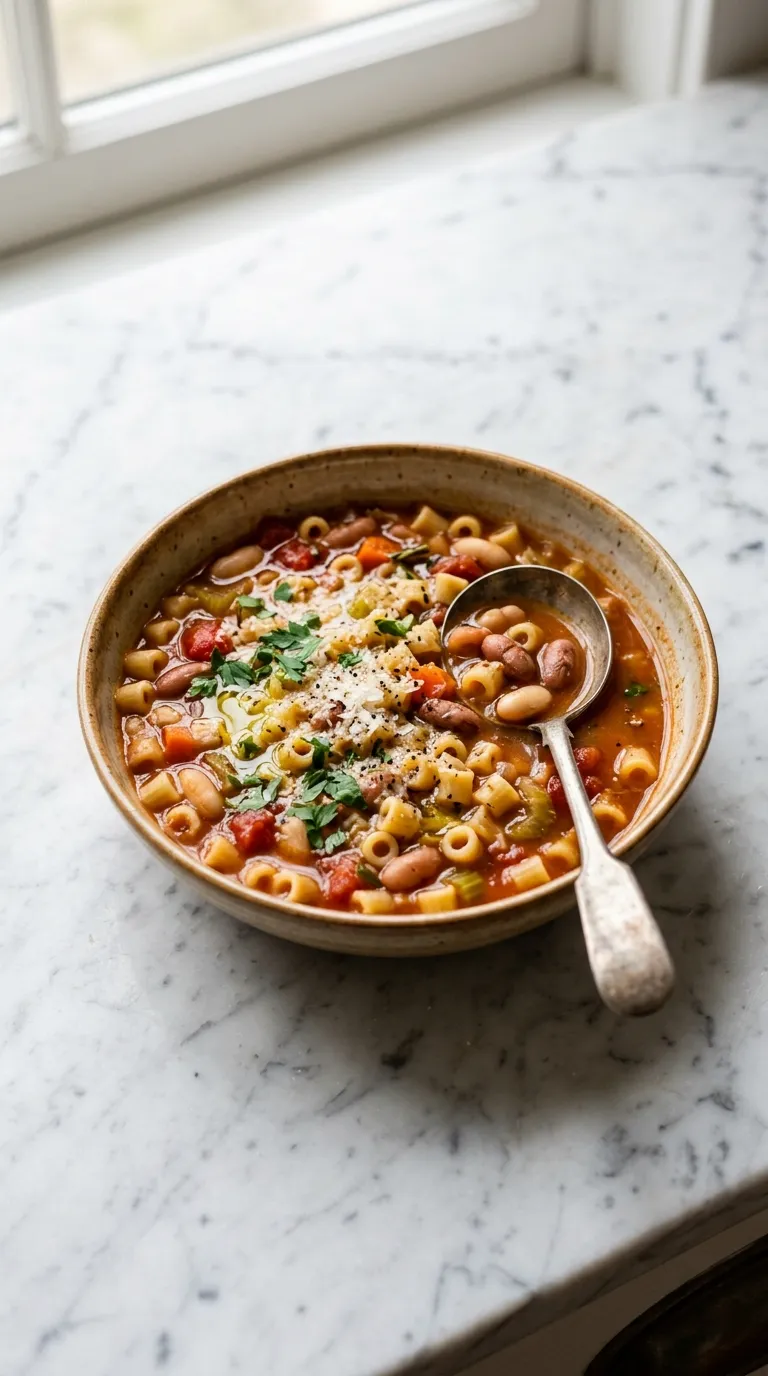
SERVE WITH PARMESAN. When it's time to serve, I ladle the pasta fagioli into bowls. I sprinkle freshly grated Parmesan cheese on top. The cheese adds a creamy richness that complements the dish.
I watch as it melts slightly, creating an inviting finish. The combination of colors and textures in each bowl looks appealing. A sprinkle of cheese brings everything together visually and flavor-wise.
If I forget the cheese, the dish may taste good but will miss that extra layer of richness. Each bowl should look inviting and ready to enjoy, making me eager to dig in.
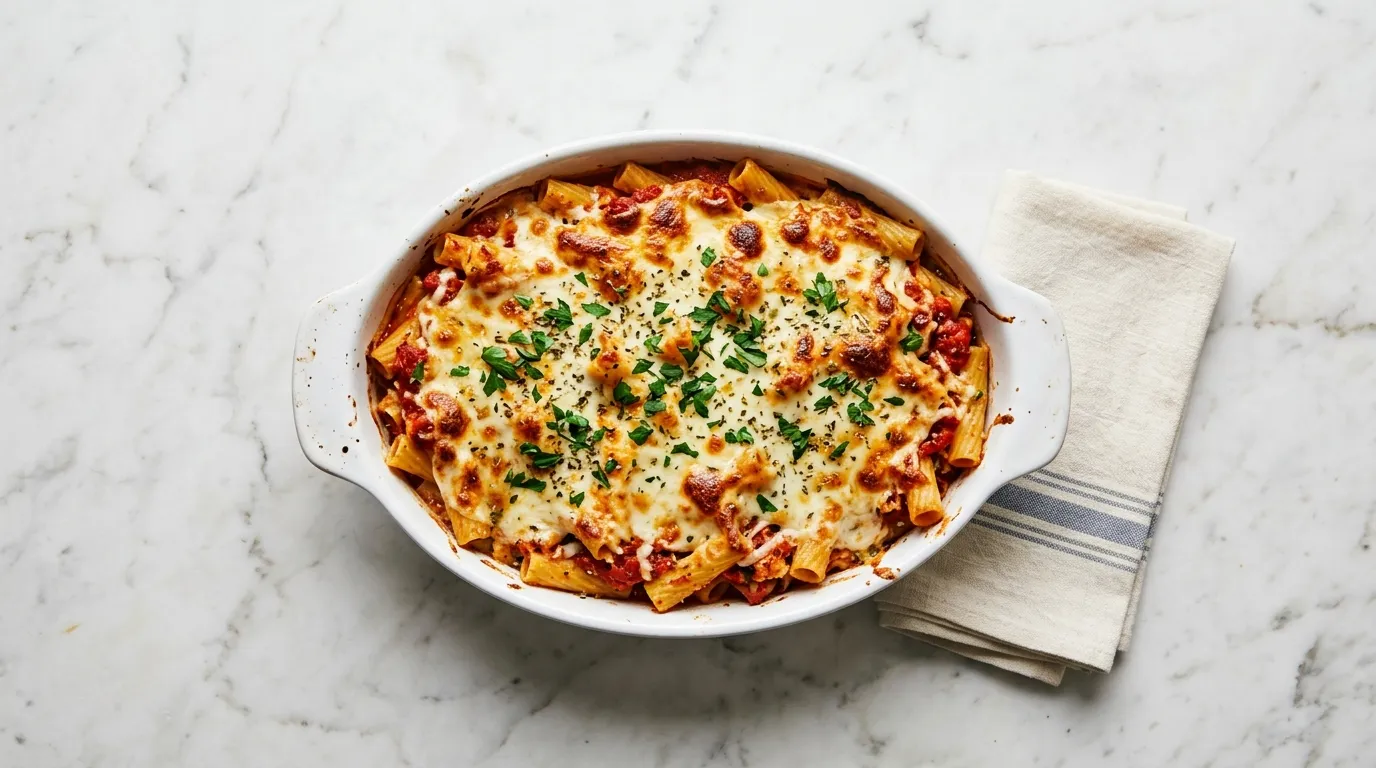
ENJOY YOUR MEAL. Finally, I sit down to enjoy my meal. Each bite is a comforting mix of flavors and textures. The hearty pasta, tender beans, and vegetables come together beautifully.
I savor the warmth and richness in each spoonful. The Parmesan cheese adds a nice touch to the overall experience. I feel satisfied and delighted with the meal I prepared.
If I rushed through the steps or skipped any, I might not have had the same enjoyment. Taking the time to cook and savor each aspect of the dish makes all the difference. This meal is not just food; it's a rewarding experience.
What the First Few Rounds Taught Me.
- Use fresh herbs for better flavor. Dried herbs can work, but fresh herbs provide a brighter taste. If I skip this, the dish may taste flat and lack the vibrant notes that fresh ingredients bring to the table.
- Keep an eye on the pasta cooking time. Overcooked pasta turns mushy and loses its structure. By being attentive, I ensure the pasta remains al dente, which adds to the overall texture of the dish.
- Don't rush the simmering step. Allowing enough time for the flavors to meld is crucial. Skipping this can lead to a dish that feels disjointed, with flavors that don't blend well together.
- Use high-quality broth. The broth serves as the foundation of flavor. If I use a low-quality broth, the dish may taste bland and uninviting, lacking the depth that a good broth brings.
- Adjust seasoning gradually. Adding too much salt or pepper at once can overpower the dish. If I don't taste as I go, I risk ruining the balance of flavors and creating an unpleasant experience.
Where It's Easy to Slip.
- Overcooking the pasta If the pasta cooks too long, it becomes mushy and loses its texture. This happens when the heat is too high or the simmering time is ignored. Instead, keep a close watch and test the pasta a minute or two before the suggested cooking time.
- Skipping the seasoning adjustment Not tasting before serving can lead to bland flavors. If the dish lacks seasoning, it won't be as enjoyable. Always taste and adjust with salt, pepper, and oregano to enhance the overall flavor before serving.
- Not stirring during simmer If I don't stir, the pasta can stick to the bottom of the pot and burn. This results in uneven cooking and a burnt flavor. Stir occasionally to ensure everything cooks evenly and nothing sticks.
- Chopping vegetables unevenly If the vegetables are not uniform in size, some will cook faster than others. This leads to a mix of crunchy and mushy textures. Spend time ensuring all pieces are similar in size for even cooking.
What Makes It a Whole Meal.
- Garlic bread The crusty, buttery bread complements the hearty pasta fagioli perfectly. It helps soak up the flavorful broth, making every bite satisfying.
- Caesar salad The crisp greens and tangy dressing provide a refreshing contrast to the rich pasta. The textures balance well, enhancing the meal's overall experience.
- Roasted vegetables Serving roasted seasonal vegetables adds color and additional nutrients. Their caramelized flavors pair nicely with the savory pasta fagioli.
- Stuffed bell peppers These offer a hearty, filling side that echoes the flavors of the pasta. Their sweetness complements the savory broth and beans in the fagioli.
How to Keep It Good.
- STORING Store in an airtight container in the fridge for 2 days. The pasta may absorb some broth.
- FREEZING Do not freeze. The beans and vegetables will lose texture and become mushy.
- REHEATING Reheat in a saucepan over medium heat until hot, about 10 minutes. The pasta may soften further.
Things People Wonder About.
Can I add meat to this recipe?
Yes, you can add cooked sausage or ground beef for extra protein. Start by browning the meat before adding the onions and garlic to build flavor.
How long does this dish keep in the fridge?
This pasta fagioli can last in the fridge for about three to four days. Store it in an airtight container to maintain freshness.
Can I freeze the leftovers?
Absolutely. Freeze the pasta fagioli in portions for up to three months. Just be aware that the pasta may change texture upon reheating.
What can I use instead of vegetable broth?
You can substitute with chicken broth for a non-vegetarian option. It will add a different depth of flavor while keeping the same quantity of four cups.
- 1 cup ditalini pasta
- 1 can (15 oz) cannellini beans, drained and rinsed
- 1 can (15 oz) diced tomatoes
- 1 medium onion, chopped
- 2 cloves garlic, minced
- 1 carrot, diced
- 1 celery stalk, diced
- 4 cups vegetable broth
- 1 tablespoon olive oil
- 1 teaspoon dried oregano
- 1 teaspoon salt
- 1/2 teaspoon black pepper
- Grated Parmesan cheese for serving
- 1PREPARE INGREDIENTS. 1. Chop 1 medium onion, mince 2 cloves garlic, dice 1 carrot, and dice 1 celery stalk. Drain and rinse 1 can (15 oz) cannellini beans. Set all ingredients aside.
- 2COOK ONIONS AND GARLIC. 2. In a large saucepan, heat 1 tablespoon olive oil over medium heat. Add chopped onion and minced garlic. Cook until softened, about 3 to 5 minutes.
- 3ADD VEGETABLES AND BEANS. 3. Add diced carrot, diced celery, and drained cannellini beans to the saucepan. Stir and cook for an additional 3 minutes.
- 4ADD PASTA AND BROTH. 4. Pour in 4 cups vegetable broth and add 1 cup ditalini pasta. Stir to combine and bring to a boil.
- 5SIMMER UNTIL TENDER. 5. Reduce heat to low, cover, and simmer for 20 minutes or until pasta is tender. Stir occasionally to prevent sticking.
- 6FINISH WITH SEASONINGS. 6. Stir in 1 teaspoon dried oregano, 1 teaspoon salt, and 1/2 teaspoon black pepper. Adjust seasoning to taste.
- 7SHARE THE LOVE. 7. If you enjoyed this Hearty Pasta Fagioli, please take a moment to give a 5-star rating and review. Share the love!
Reviews
Community Guidelines
We love hearing how this recipe turned out for you. Please keep reviews about the recipe itself, stay kind and helpful to other cooks, and leave out personal details or links. Every review is checked before it appears.