
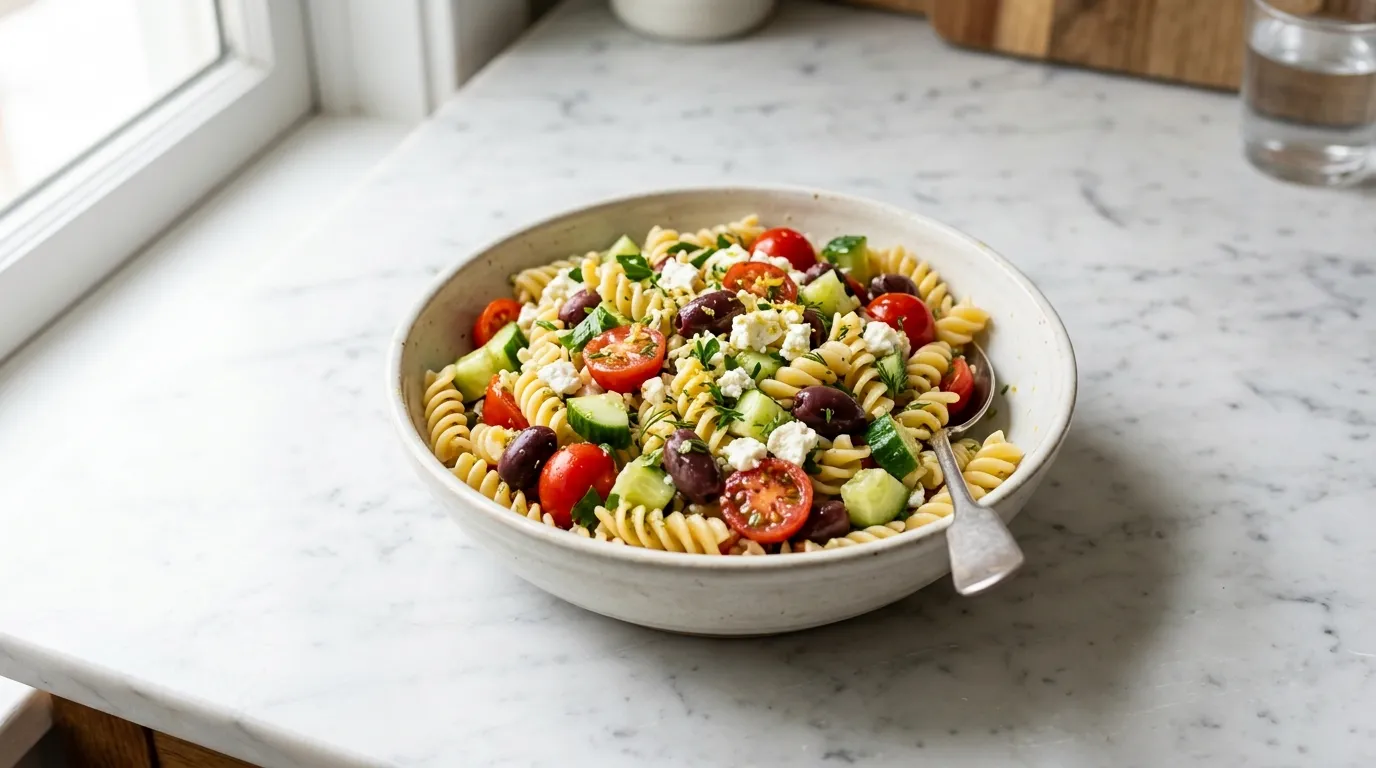
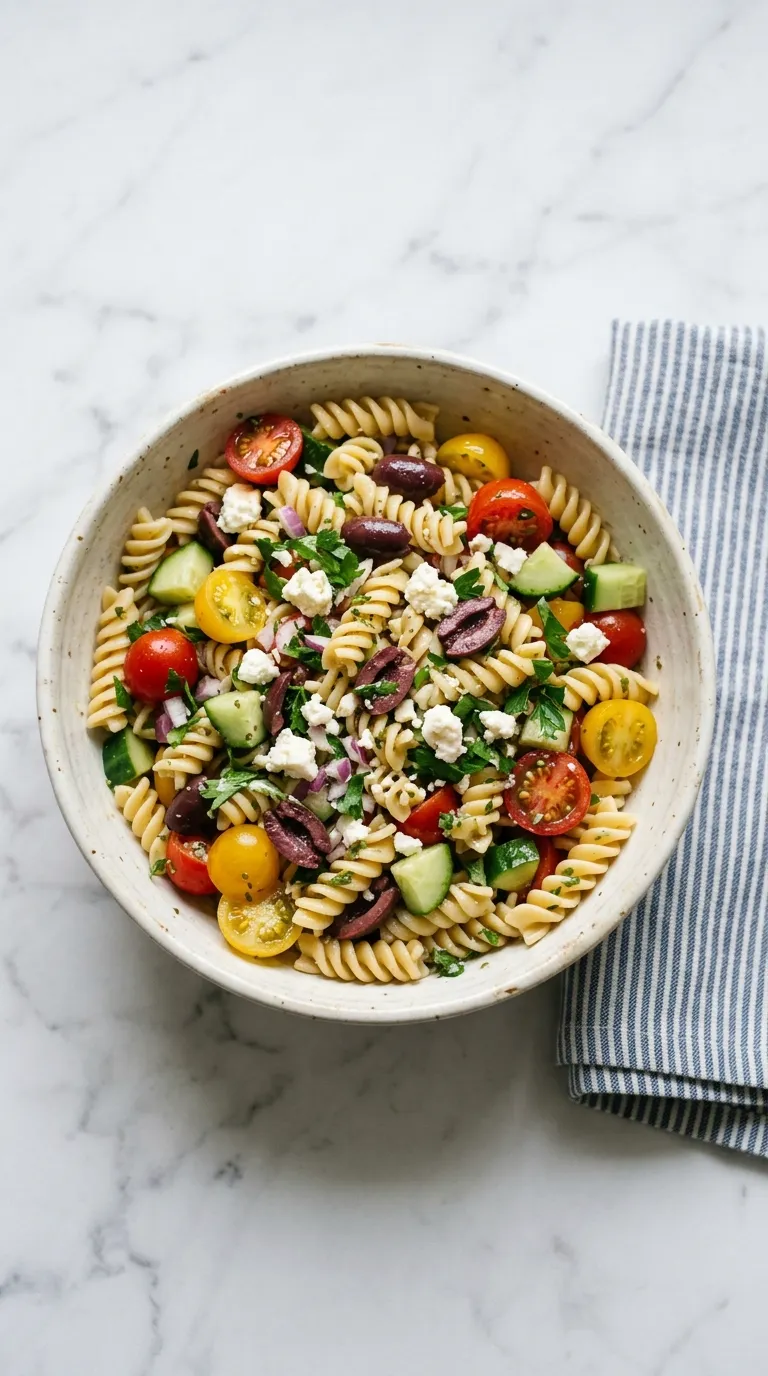
Mediterranean Pasta Salad with Feta and Olives — Mediterranean Pasta Salad with Feta and Olives features eight fresh ingredients. I prepare this salad in about 20 minutes. This version stands out with the briny flavors of feta and olives, making it vibrant and satisfying.
My Latest Video
Bright and flavorful salad experience.
- This pasta salad incorporates feta and olives, adding tangy and salty elements that enhance the overall taste.
- Fresh cherry tomatoes, cucumber, and red onion provide crunch and brightness, making each bite refreshing.
- Olive oil and red wine vinegar create a simple dressing that ties the ingredients together without overpowering them.
What Goes in the Bowl.
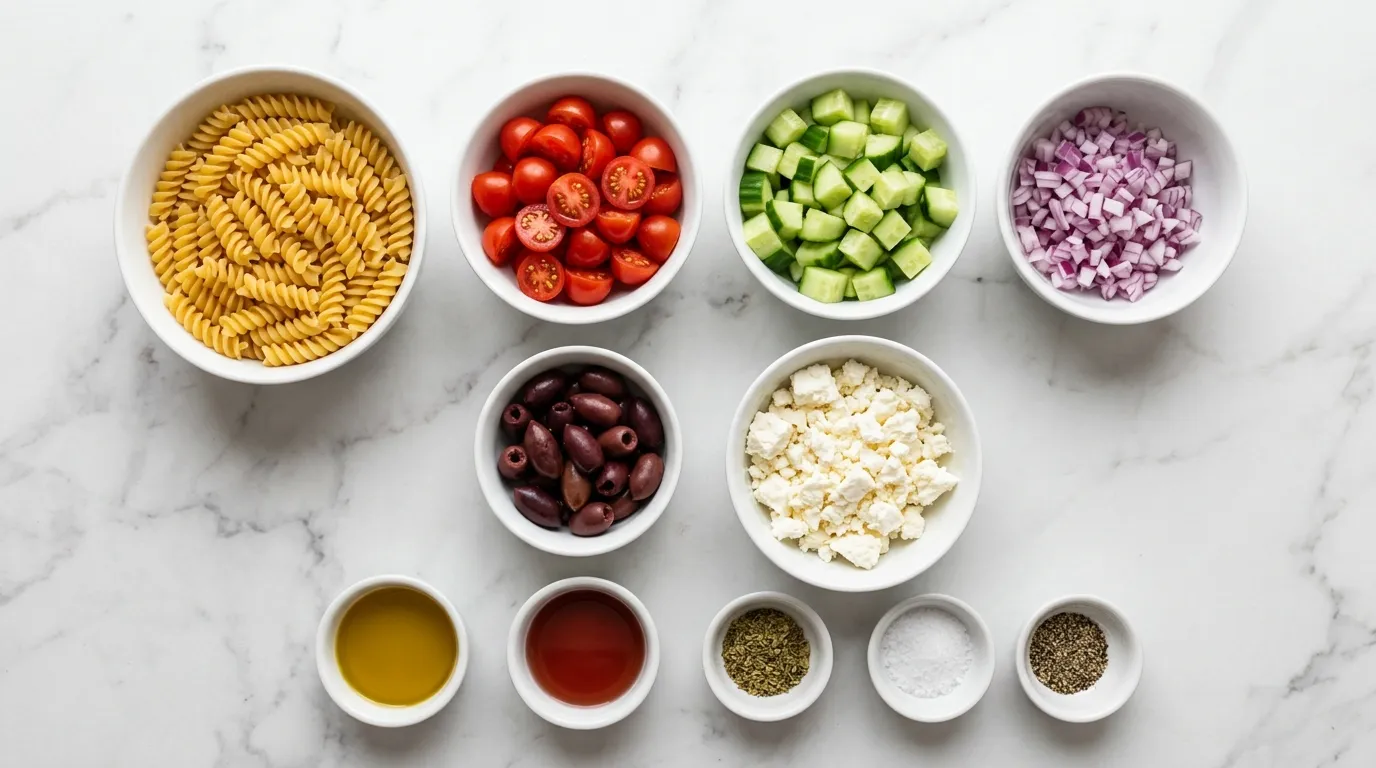
- 8 ounces pasta of choice
- 1 cup cherry tomatoes, halved
- 1 cup cucumber, diced
- 1/2 cup red onion, finely chopped
- 1/2 cup Kalamata olives, pitted and sliced
- 1 cup feta cheese, crumbled
- 1/4 cup olive oil
- 2 tablespoons red wine vinegar
- 1 teaspoon dried oregano
- Salt and pepper to taste
Where the Choices Matter.
- Pasta Pasta serves as the base of this salad. Use any type you prefer, like penne or fusilli. Substituting with whole wheat pasta increases fiber but may slightly alter the texture. If using whole wheat, cook it for an additional minute to achieve the right firmness.
- Feta Cheese Feta adds creaminess and tanginess to the salad. If unavailable, goat cheese can be a substitute but has a stronger flavor. Use a similar amount, crumbled, but adjust based on your taste preference, as goat cheese can be more pungent.
- Kalamata Olives Kalamata olives provide a rich flavor and contrast in texture. If you substitute with green olives, expect a milder taste. Use the same amount, but consider adding a bit of extra seasoning to enhance the flavor.
- Red Onion Red onion adds a sharp bite and beautiful color. Substituting with yellow onion changes the flavor profile to a sweeter note. Use half the amount of yellow onion to avoid overwhelming the other ingredients.
Start to Finish.
CHOP THE VEGETABLES. I start by chopping the vegetables. I take fresh cherry tomatoes and slice them in half. Their bright red color brings life to the dish. Next, I dice a cucumber into small pieces, making sure each piece is uniform.
The crunchiness of the cucumber adds a refreshing texture. I finely chop red onion, letting the sharp aroma fill the air. It's essential to keep the pieces small for balance. Finally, I slice the Kalamata olives.
The dark olives offer a rich contrast to the other colors. I know this step worked when I have a vibrant mix of chopped vegetables, each with its distinct shape and color. If the pieces are too large, they won't blend well with the pasta later. I ensure everything is bite-sized for an enjoyable eating experience.
COOK THE PASTA. I move on to cooking the pasta. I fill a pot with water and bring it to a boil. Once it bubbles vigorously, I add the pasta. The sound of it hitting the boiling water is satisfying.
I stir occasionally to prevent sticking. Cooking it until al dente is crucial; it should be firm yet tender. When finished, the pasta should have a slight bite to it. I know it's done when I taste a piece and feel a gentle resistance.
If overcooked, the pasta becomes mushy and can ruin the texture of the salad. Timing is everything here, so I keep a close watch on the clock.
DRAIN AND RINSE. After cooking, draining and rinsing the pasta comes next. I pour the pasta into a colander, letting the hot water escape. The steam rises, filling the kitchen with warmth.
I rinse the pasta under cold water, halting the cooking process. This step is critical to avoid sogginess. I know it worked when the pasta cools down and no longer steams.
The pasta should feel firm and slightly slippery from the rinse. Skipping this step can lead to a salad that clumps together, making it less enjoyable. Taking a moment to rinse ensures each piece remains distinct and fresh in the final dish.
MIX THE DRESSING. Next, I mix the dressing. In a bowl, I combine olive oil and red wine vinegar. The two blend smoothly, creating a glossy mixture.
I add dried oregano, letting its aroma fill the air. A good stir helps all the flavors meld together. I know it's ready when the dressing looks consistent and aromatic.
It should smell flavorful but not overpowering. If the oil and vinegar don't mix well, the dressing won't coat the salad evenly. A thorough mix is essential for balanced flavor in every bite.
COMBINE ALL INGREDIENTS. Combining all the ingredients follows. I take a large mixing bowl and add the cooked pasta. Next, I introduce the chopped vegetables, ensuring they are evenly distributed.
The colors are vibrant and inviting. I gently stir the mixture, making sure everything is well incorporated. I know this step worked when the pasta and vegetables are mixed evenly, with no clumps.
If I rush this process, some bites may be overwhelmingly pasta, while others lack the vegetable crunch. A careful mix ensures even flavor and texture throughout the salad.
ADD FETA AND OLIVES. I add the feta and olives to the mixture. I sprinkle crumbled feta over the top, letting it fall in fluffy pieces. The feta adds creaminess and a slight tang.
I then mix in the sliced Kalamata olives, their dark color adding depth. The contrast of textures is delightful. I know this step is done when the salad is speckled with white feta and dark olives.
If I add them too soon or mix too vigorously, the feta can break apart too much and lose its shape. It's important to fold these in gently for a pleasing presentation and taste.
TOSS TO COMBINE. Tossing to combine is next. I carefully lift and turn the salad with a large spoon, ensuring each ingredient is coated with the dressing.
The pasta should glisten, and the vegetables should be evenly distributed. I know I've done this correctly when I see a colorful mix, and the salad looks cohesive.
If I don't toss it well, some portions may be dry while others are overly wet. This step is key to achieving a balanced bite of flavors and textures with every forkful.
SERVE CHILLED. Finally, serving chilled brings everything together. I transfer the salad to a serving dish and place it in the refrigerator.
This step allows the flavors to meld and the salad to chill thoroughly. I know it's ready when it's cold to the touch and the flavors have developed.
Serving it too soon can mean missing out on the harmonious taste that develops with time. Ideally, I let it chill for a while before enjoying, ensuring each bite is refreshing.
Things I Learned While Testing This Recipe.
- Chill the salad for at least an hour before serving. If you skip this, the flavors won't meld well, and the salad may taste bland. A proper chill brings out the best in the ingredients.
- Use fresh herbs when possible. Dried herbs can lose their potency, leading to a less vibrant flavor. Fresh herbs will lift the entire dish and make it more aromatic.
- Taste the dressing before adding it to the salad. If it's too tangy or oily, you can adjust it. Ignoring this step might lead to an unbalanced flavor that overshadows the other ingredients.
- Add the feta and olives at the end. If you mix them in too early, they can break apart and lose their distinct textures. This leads to a less appealing presentation and a muddled taste.
- Be cautious with salt when cooking pasta. Over-salting can make the dish too salty overall. If you don't season it properly, the salad may end up lacking depth and flavor.
- Use a large bowl for mixing. If the bowl is too small, ingredients can spill out or not mix well. A cramped space leads to uneven distribution of flavors and textures.
Where It's Easy to Slip.
- Overcooking the pasta If the pasta is overcooked, it becomes mushy and ruins the salad's texture. This happens when you don't keep an eye on the cooking time. To avoid this, taste the pasta a minute or two before the recommended cooking time.
- Skipping the rinse Not rinsing the pasta can lead to a soggy salad. The starches from the pasta create clumps that can ruin the texture. Always rinse under cold water to stop the cooking process and separate the pasta.
- Forgetting to mix the dressing If the dressing is not mixed well, the flavors won't distribute evenly. This can lead to some bites being bland. Always whisk the dressing until it becomes a uniform mixture before adding it to the salad.
- Adding feta too early If feta is mixed in too soon, it can break down and lose its texture. This happens during vigorous stirring. Add feta at the end and fold it in gently to maintain its shape and presentation.
What Goes Well with This.
- Grilled chicken skewers These complement the salad's flavors and add protein. The smoky flavor of the chicken pairs well with the tangy feta and olives.
- Stuffed grape leaves Dolmas provide a Mediterranean touch. Their savory filling enhances the salad's freshness and creates a balanced meal.
- Roasted red pepper hummus Hummus adds creaminess and depth. It works well as a dip alongside the salad, giving a nice contrast in flavors.
- Pita bread Warm pita bread serves as a great vehicle for the salad. It adds a chewy texture that contrasts nicely with the crisp vegetables.
Keeping It for Later.
- STORING Keep in an airtight container in the fridge for up to 2 days. The pasta may soak up the dressing and lose some flavor.
- REHEATING Reheat gently on the stove over low heat until warmed through, about 5 minutes. The feta may soften further but will retain its flavor.
Answering the Usual Ones.
Can I make this salad ahead of time?
Yes, you can prepare the salad a day in advance. Just keep it stored in the refrigerator. Allowing it to chill overnight helps the flavors meld beautifully.
How long will leftovers last?
Leftover Mediterranean pasta salad can last up to three days in the refrigerator. Make sure to store it in an airtight container to keep it fresh.
Can I use different vegetables?
Absolutely. Feel free to add bell peppers, artichokes, or spinach. Just remember that some vegetables may need different chopping or preparation methods.
Is this salad gluten-free?
The salad is not gluten-free unless you use gluten-free pasta. There are many good gluten-free pasta options available; just follow the cooking instructions on the package.
- 8 ounces pasta of choice
- 1 cup cherry tomatoes, halved
- 1 cup cucumber, diced
- 1/2 cup red onion, finely chopped
- 1/2 cup Kalamata olives, pitted and sliced
- 1 cup feta cheese, crumbled
- 1/4 cup olive oil
- 2 tablespoons red wine vinegar
- 1 teaspoon dried oregano
- Salt and pepper to taste
- 1Prepare the pasta. 1. In a saucepan, bring a large pot of salted water to a boil. Add eight ounces of pasta of your choice and cook for ten minutes or until al dente. Drain and rinse under cold water to cool.
- 2Prepare the vegetables. 2. While the pasta is cooking, prepare one cup of cherry tomatoes by halving them, one cup of cucumber by dicing it, and half a cup of red onion by finely chopping it. Also, slice half a cup of pitted Kalamata olives.
- 3Make the dressing. 3. In a bowl, whisk together one quarter cup of olive oil, two tablespoons of red wine vinegar, one teaspoon of dried oregano, and salt and pepper to taste to create the dressing.
- 4Combine pasta and veggies. 4. In a large bowl, combine the cooked pasta with the prepared vegetables: halved cherry tomatoes, diced cucumber, finely chopped red onion, and sliced Kalamata olives.
- 5Add feta and olives. 5. Gently fold in one cup of crumbled feta cheese and the sliced olives into the pasta and vegetable mixture.
- 6Toss and chill. 6. Toss everything together until well mixed. Cover the bowl and chill in the refrigerator for at least thirty minutes before serving.
- 7SHARE THE LOVE. 7. If you enjoyed this Mediterranean Pasta Salad with Feta and Olives, please take a moment to leave a 5-star rating and a review. SHARE THE LOVE!
Reviews
Community Guidelines
We love hearing how this recipe turned out for you. Please keep reviews about the recipe itself, stay kind and helpful to other cooks, and leave out personal details or links. Every review is checked before it appears.