
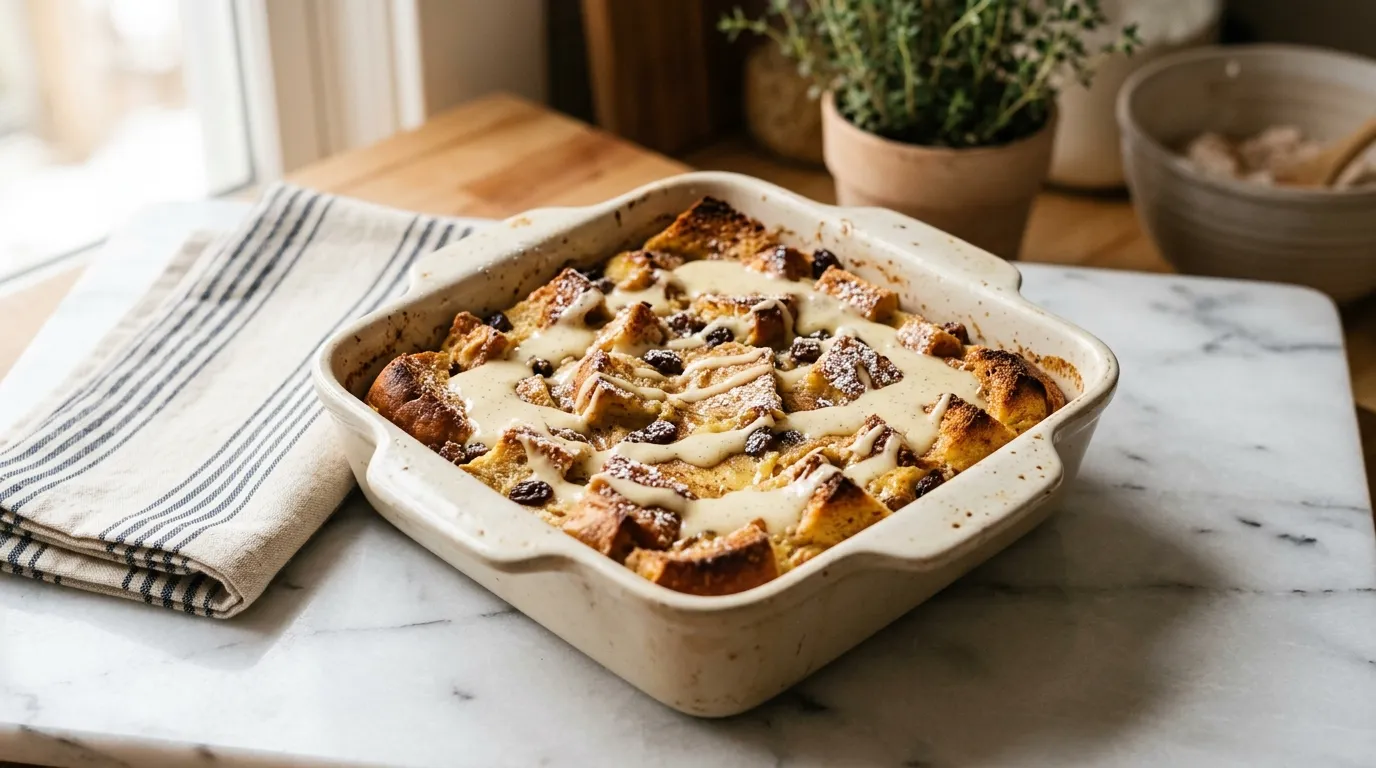
Warm Bread Pudding with Vanilla Sauce for Cozy Nights — Warm bread pudding is a comforting dessert with just eight ingredients. I love how the custard soaks into the bread, creating a rich flavor. This version stands out with a sweet vanilla sauce to drizzle on top.
My Latest Video
Comfort in every bite.
- This bread pudding uses stale bread, allowing it to soak up the custard. This creates a soft, cozy texture that contrasts nicely with the creamy sauce.
- The addition of vanilla in both the pudding and the sauce enhances the overall sweetness, making each bite more satisfying.
- Ground cinnamon adds warmth and spice, elevating the flavor profile and making it perfect for chilly nights.
What Goes in the Bowl.
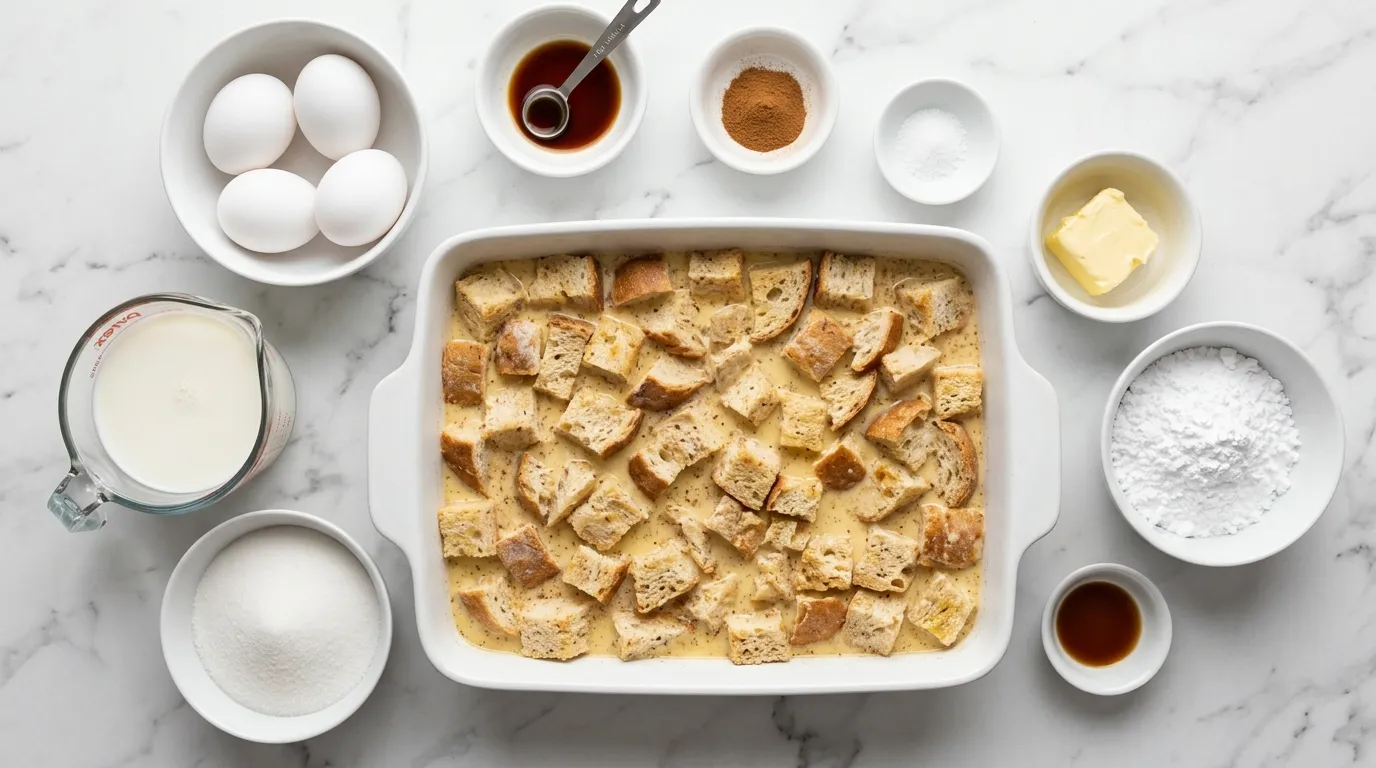
- 6 cups cubed stale bread
- 4 large eggs
- 2 cups milk
- 1 cup granulated sugar
- 1 tablespoon vanilla extract
- 1 teaspoon ground cinnamon
- 1/4 teaspoon salt
- 1/4 cup unsalted butter
- 1 cup powdered sugar
- 1 teaspoon vanilla extract (for sauce)
A Few Notes on the Ingredients.
- Cubed stale bread Stale bread absorbs the custard better than fresh bread. Fresh bread may lead to a soggy pudding because it retains too much moisture. If you must use fresh bread, reduce the milk by 1/2 cup to balance the moisture.
- Granulated sugar Granulated sugar sweetens the pudding evenly. If you substitute with brown sugar, it will add a richer flavor but may make the pudding slightly denser. Use the same amount, but be aware of the flavor difference.
- Unsalted butter Unsalted butter allows for better control of the saltiness in the dish. If you use salted butter, reduce the added salt to an 1/8 teaspoon. This ensures the pudding is perfectly balanced without being overly salty.
- Powdered sugar Powdered sugar dissolves quickly, creating a smooth sauce. If using granulated sugar, you'll need to blend it well to avoid a gritty texture. Use about 1 1/4 cups of granulated sugar to achieve similar sweetness.
Here's How I Put It Together.
PREPARE THE BREAD. I start by gathering the stale bread and cutting it into cubes. This bread should be a bit dry, as it helps absorb the custard. I place the cubes into a large mixing bowl.
I make sure the pieces are roughly the same size for even soaking. As I work, I can hear the bread tearing slightly. It's a satisfying sound.
The texture of the bread should feel crumbly, not fresh and soft. If the bread is too fresh, it won't soak up the liquid properly, and the pudding will end up soggy instead of creamy. I set the bowl aside, ready for the next steps.
WHISK THE EGGS. Next, I crack the eggs into a separate bowl. I whisk them vigorously until they are well blended. The mixture should turn a pale yellow and be slightly frothy on top.
This means I've incorporated enough air, which helps create a light texture in the pudding. I can tell it's ready when I see small bubbles forming. It's important to really whisk them well.
If the eggs remain too separated or lumpy, it will affect the smoothness of the final dish. I place the whisked eggs aside for the next stage.
COMBINE MILK AND SUGAR. I pour the milk into another bowl and add the sugar. I stir the mixture until the sugar dissolves completely. The milk should feel slightly thicker as the sugar incorporates.
I watch for a smooth texture without any granules. This blending is crucial because undissolved sugar will create a grainy texture in the pudding. I can hear the spoon scraping the sides of the bowl as I stir.
It's a comforting sound, signaling that I'm on the right track. If I don't mix it thoroughly, the sweetness will be uneven, and some bites might taste bland.
MIX IN THE BREAD. I add the cubed bread to the milk and sugar mixture. Gently, I fold the bread in, ensuring every piece gets coated. I can feel the bread absorbing the liquid as I mix.
It becomes softer and more pliable. If I notice that some pieces are still dry, I give them a little extra attention. The goal is to have all the bread evenly soaked.
If any chunks remain untouched, they won't soften properly during baking, leading to a crunchy texture that I don't want. This step is key to achieving a creamy consistency.

ALLOW TO SOAK. Next, I let the mixture sit for a while. This soaking time allows the bread to absorb all the liquid. I can see the bread swell and soften as it sits.
It's important to let it soak for the right amount of time, about ten to fifteen minutes. I watch for a change in texture; the bread should become almost mushy. If I skip this step, I risk ending up with dry spots in the pudding that haven't absorbed enough custard.
That would not be ideal. So, I just wait patiently for it to transform.
BAKE UNTIL GOLDEN. I transfer the soaked mixture into a greased baking dish. I smooth out the top with a spatula. As it goes into the oven, I listen for the soft squish of the mixture settling.
After baking for a while, I keep an eye on it. The top should turn golden and slightly crisp. The smell fills the kitchen, warm and inviting.
If it starts to brown too quickly, I can cover it loosely with foil to prevent burning. Ignoring this could lead to an overly dark top while the inside remains undercooked. I carefully watch it to get that perfect golden finish.
MAKE THE VANILLA SAUCE. While the pudding is baking, I focus on the vanilla sauce. I mix the powdered sugar with a bit of milk and the vanilla extract. I whisk until it reaches a smooth consistency.
The sauce should be runny but not too thin, coating the back of a spoon perfectly. I can tell it's ready when it glistens and flows nicely. If it's too thick, I can add a splash more milk.
Getting the right texture is key. If it's too thin, it won't stay on the pudding when served, and if it's too thick, it won't drizzle nicely. I want it just right for drizzling.
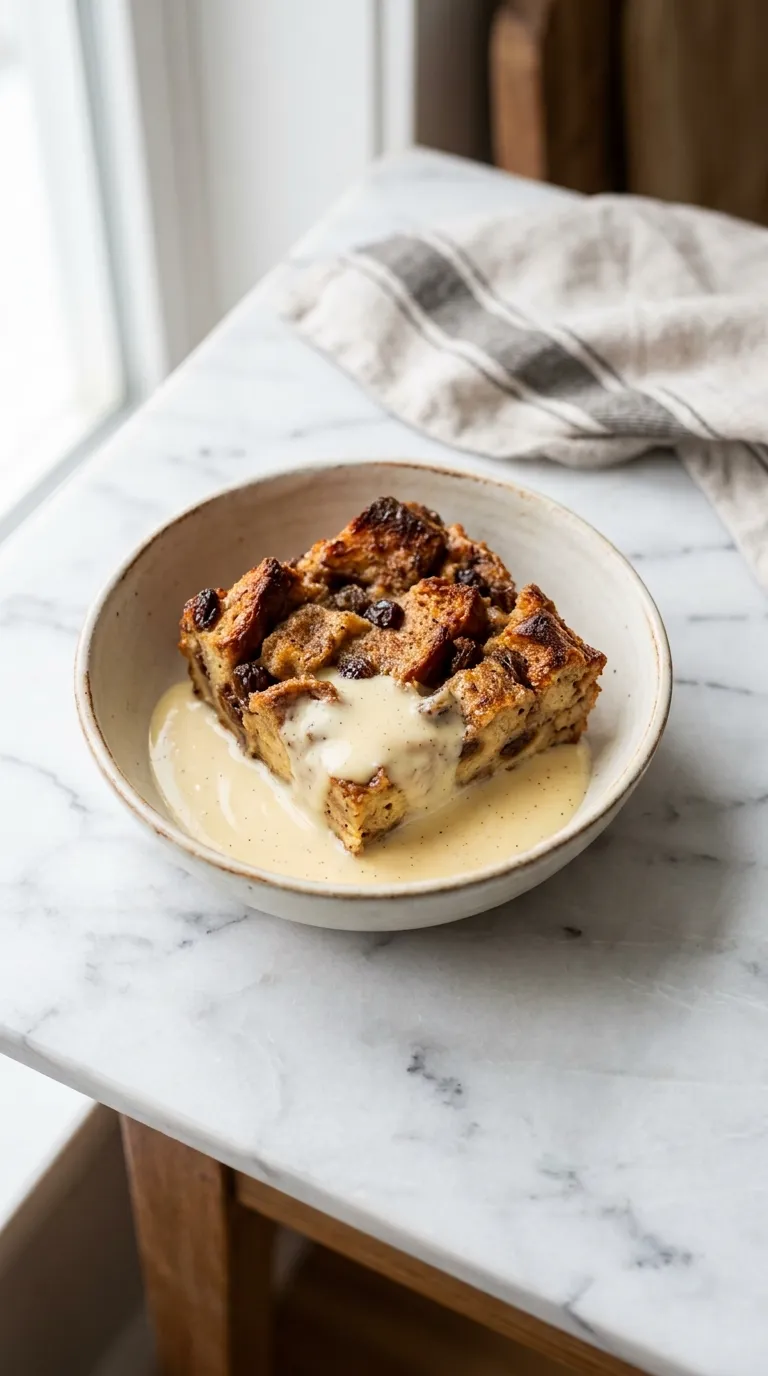
SERVE WARM AND ENJOY. Finally, I take the warm bread pudding out of the oven. I let it cool for a few moments before serving. The top should be golden brown, and the edges slightly crisp.
I ladle some of the vanilla sauce over each portion. As I do this, I watch the sauce slowly seep into the warm pudding. The combination looks appealing.
I serve it warm, knowing that the rich flavors will be comforting. If I let it cool too much, it might not be as enjoyable. The warmth enhances the flavors, making every bite delightful.
What I Figured Out After a Few Tries.
- Use day-old bread. Fresh bread won't absorb the custard well and can lead to a soggy pudding. Stale bread soaks up the liquid, creating a rich and creamy texture that's essential for a successful dish.
- Whisk the eggs thoroughly. Insufficient whisking leaves lumps in the custard, resulting in an uneven texture in the final pudding. A well-blended egg mixture ensures a smooth and consistent pudding that is enjoyable to eat.
- Monitor the baking time. Overbaking can dry out the pudding, leading to a tough texture. Keeping an eye on it ensures a golden crust while maintaining a soft, custardy interior.
- Let it cool slightly before serving. Serving the pudding too hot can mask the flavors and make it difficult to taste the nuances. A brief cooling period allows the flavors to settle and enhances the overall experience.
- Adjust the vanilla sauce thickness. A sauce that is too thin won't stay on the pudding, while one that is too thick won't drizzle properly. Finding the right consistency is essential for a beautiful presentation and flavor balance.
The Parts That Trip People Up.
- Using fresh bread Fresh bread does not absorb the custard well. This results in a soggy texture rather than a creamy pudding. Always opt for stale bread or let fresh bread dry out for a day before using.
- Not whisking the eggs enough Under-whisked eggs can lead to a lumpy texture in the pudding. This affects the overall consistency. Ensure you whisk until the eggs are frothy and pale, incorporating enough air for a light pudding.
- Skipping the soaking time If the bread isn't soaked long enough, it won't absorb all the liquid. This leads to dry spots in the pudding. Allow at least ten to fifteen minutes for the bread to fully soak in the custard.
- Baking at too high a temperature High temperatures can lead to an overly brown top while the inside remains undercooked. Bake at a moderate temperature and check for doneness with a toothpick to ensure the pudding is cooked through.
Good Company for This One.
- Vanilla ice cream The creamy texture of vanilla ice cream complements the warm, custardy pudding. The contrast in temperature enhances the overall experience.
- Fresh berries Berries add a refreshing tartness that balances the sweetness of the pudding. Their natural acidity cuts through the richness.
- Caramel sauce Drizzling caramel sauce adds a sweet, buttery layer to the dish. It pairs well with the vanilla flavors, enhancing the dessert.
- Whipped cream Light and airy, whipped cream adds a nice contrast to the dense pudding. It also provides a beautiful presentation when served on top.
How to Keep It Good.
- STORING Keep in an airtight container in the fridge for up to 2 days. The crust may soften.
- REHEATING Reheat in the oven at 350°F for 15 minutes. This helps restore some texture.
Frequently Asked Questions
- 6 cups cubed stale bread
- 4 large eggs
- 2 cups milk
- 1 cup granulated sugar
- 1 tablespoon vanilla extract
- 1 teaspoon ground cinnamon
- 1/4 teaspoon salt
- 1/4 cup unsalted butter
- 1 cup powdered sugar
- 1 teaspoon vanilla extract (for sauce)
- 1PREHEAT OVEN TO 350°F.
- 2GREASE A 9x13 PAN. GREASE A 9x13 inch baking dish.
- 3ASSEMBLE INGREDIENTS. ASSEMBLE 6 cups cubed stale bread, 4 large eggs, 2 cups milk, 1 cup granulated sugar, 1 tablespoon vanilla extract, 1 teaspoon ground cinnamon, 1/4 teaspoon salt, and 1/4 cup unsalted butter.
- 4POUR MIXTURE INTO PAN. POUR mixture into the greased 9x13 inch baking dish.
- 5BAKE FOR 45 MINUTES.
- 6WHISK SAUCE INGREDIENTS TOGETHER. WHISK together 1 cup powdered sugar, 1 teaspoon vanilla extract, and 1/4 cup unsalted butter until smooth for the sauce.
- 7SERVE WITH SAUCE. SERVE warm bread pudding with the prepared vanilla sauce.
- 8SHARE THE LOVE. Please leave a 5-star rating and review!
Reviews
Community Guidelines
We love hearing how this recipe turned out for you. Please keep reviews about the recipe itself, stay kind and helpful to other cooks, and leave out personal details or links. Every review is checked before it appears.